

Most advice on ranking in AI Overviews is speculative, so we’ve analyzed millions of AI Overview responses and citations to find out what actually works.
Our own research shows AI Overviews have caused click-through rate drops of 34.5%, with new research from Seer Interactive reporting drops as high as 61%.
And research from Pew shows users who encounter an AI summary click on a traditional search result in just 8% of visits, compared to 15% without one.
AI Overviews are eating traffic left and right, but they’ve become part of the search landscape, and we have no choice but to navigate it.
Today, the SERPs are more about awareness, and less about traffic.
And if you don’t rank in an AI Overview, you don’t get seen. Period.
When your page is cited within the AI search response—usually displayed at the top of the SERP—you’re effectively “ranking” in an AI Overview.
The top cited URL is visible to searchers on desktop search without any interaction.
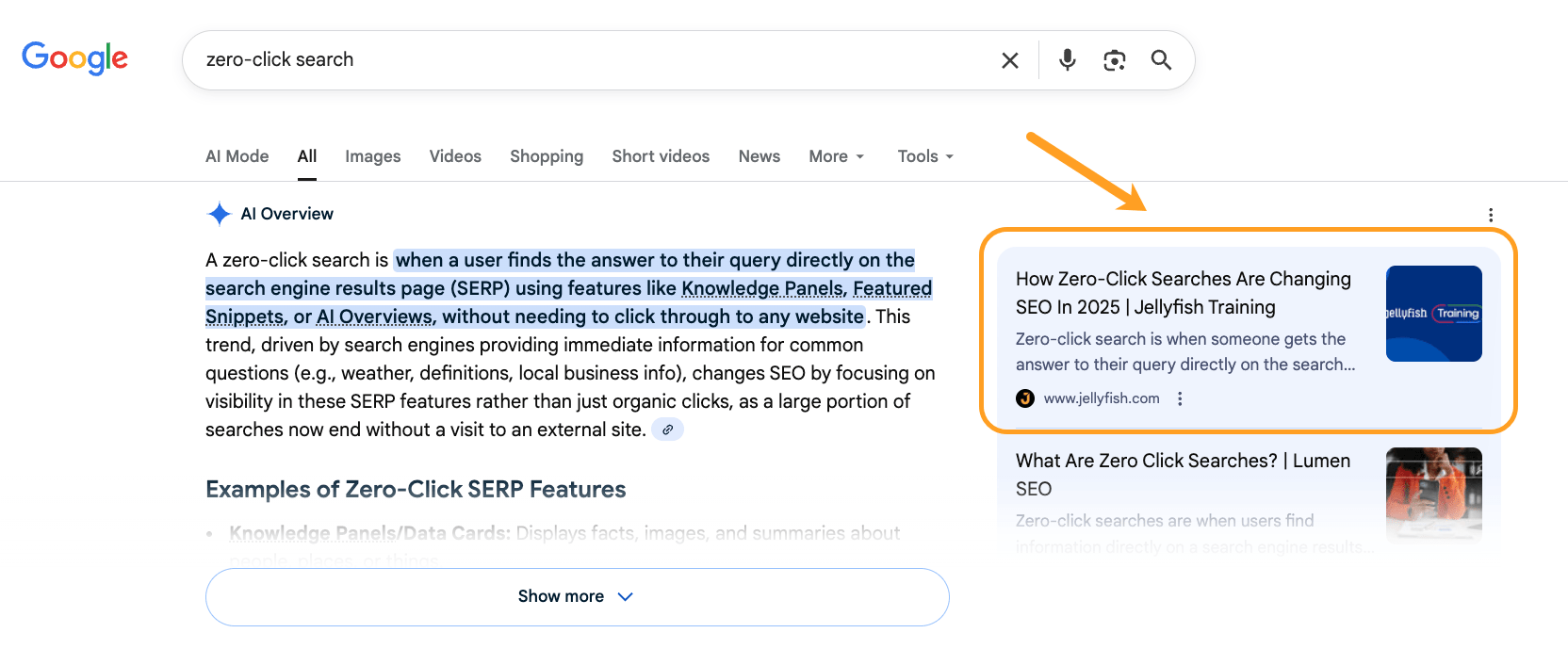
The top three URLs are visible if users click “Show more,” and all cited sources become visible if someone specifically expands the full list by clicking “Show all”.
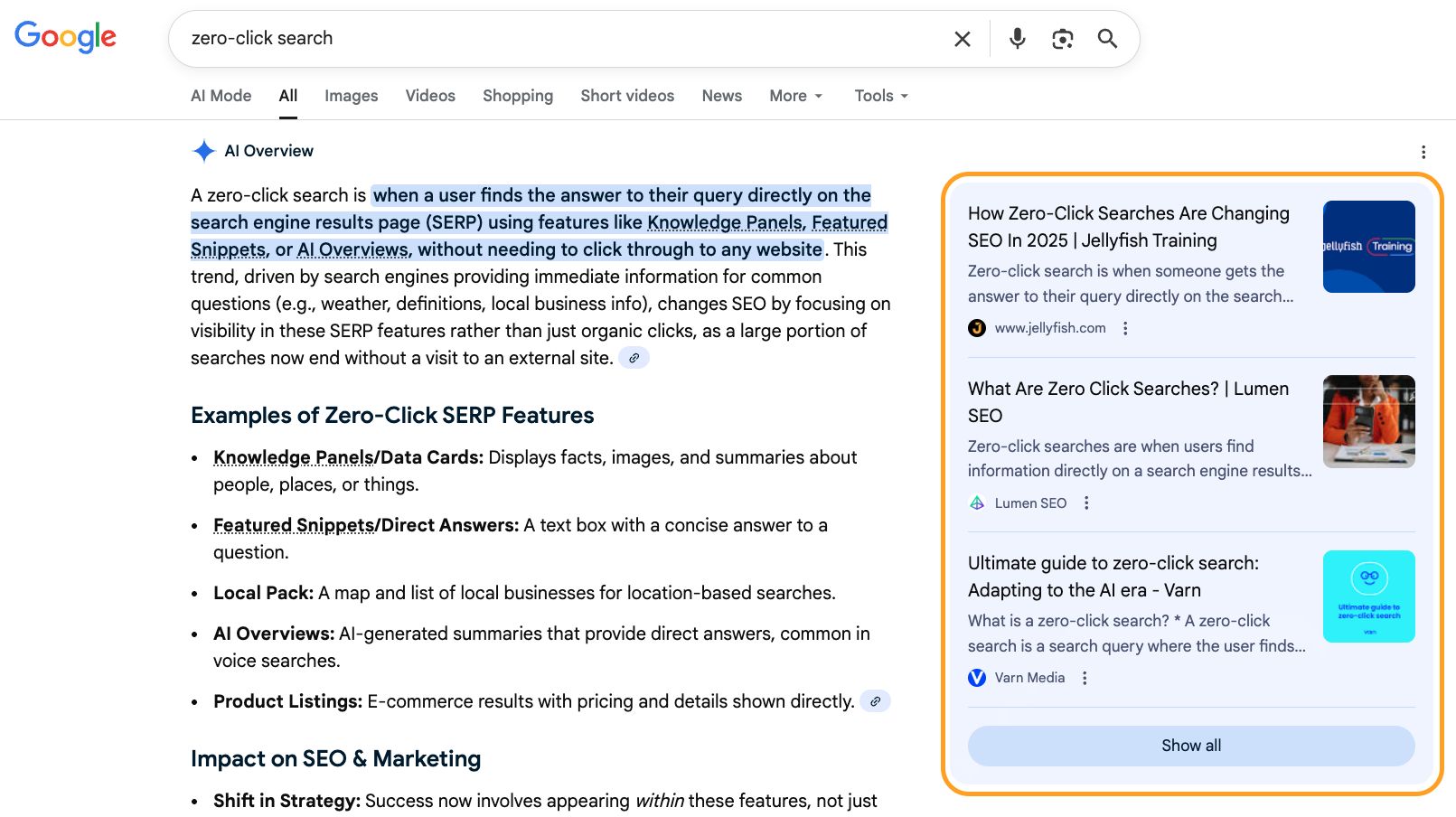
These “rankings” aren’t final. Don’t think of them as equivalent to traditional search rankings.
Google’s AI summaries are non-deterministic, meaning they change with every refresh—and so do the URLs they cite.
Here’s what we know about ranking in AI Overviews based on our data.
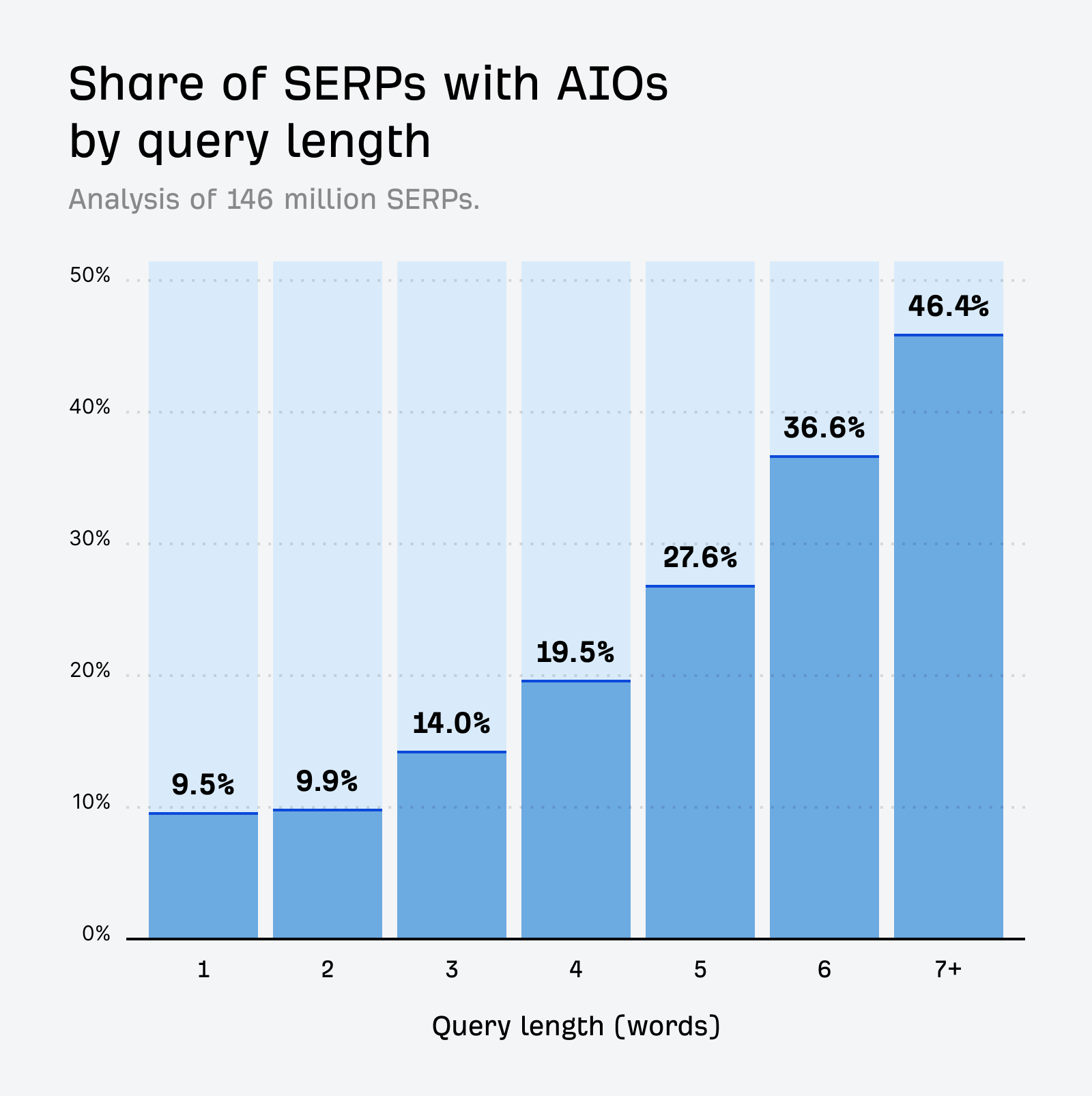
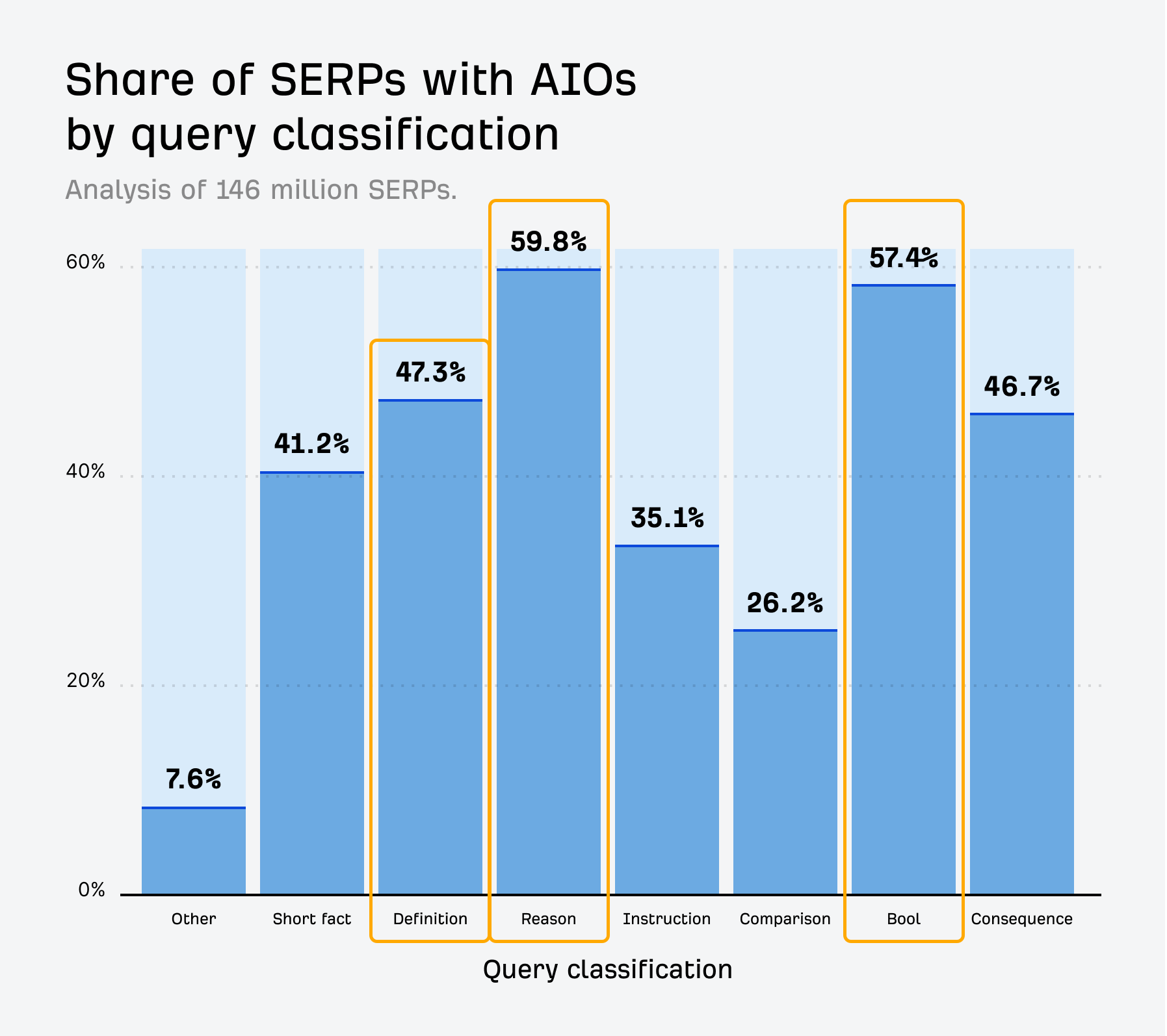
We analyzed 146 million SERPs and found that AI Overviews trigger on 21% of all keywords—but certain query types trigger them way more often.
For example, AI Overviews appear in 57.9% of question queries…
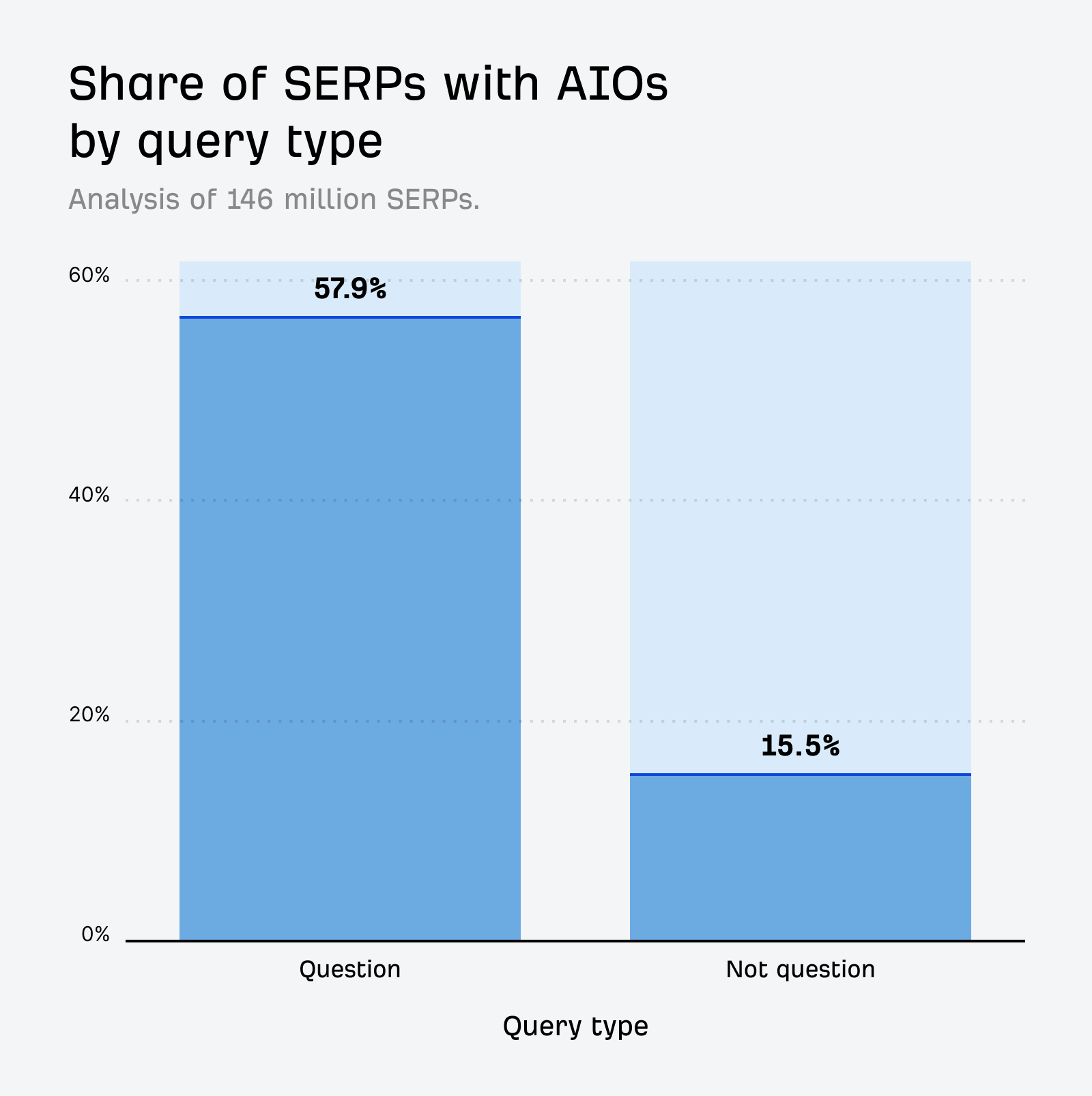
… And 46.4% of queries with 7+ words.
The type of question also matters. “Reason” queries (i.e. “why” questions) trigger AI Overviews 59.8% of the time—the highest rate of any category we studied.
“Bool” queries (i.e. “yes/no” questions) and “Definition” queries also show significantly higher-than-average AI Overview rates at 57.4% and 47.3% respectively.
Meanwhile, 99.9% of AI Overview keywords are informational.
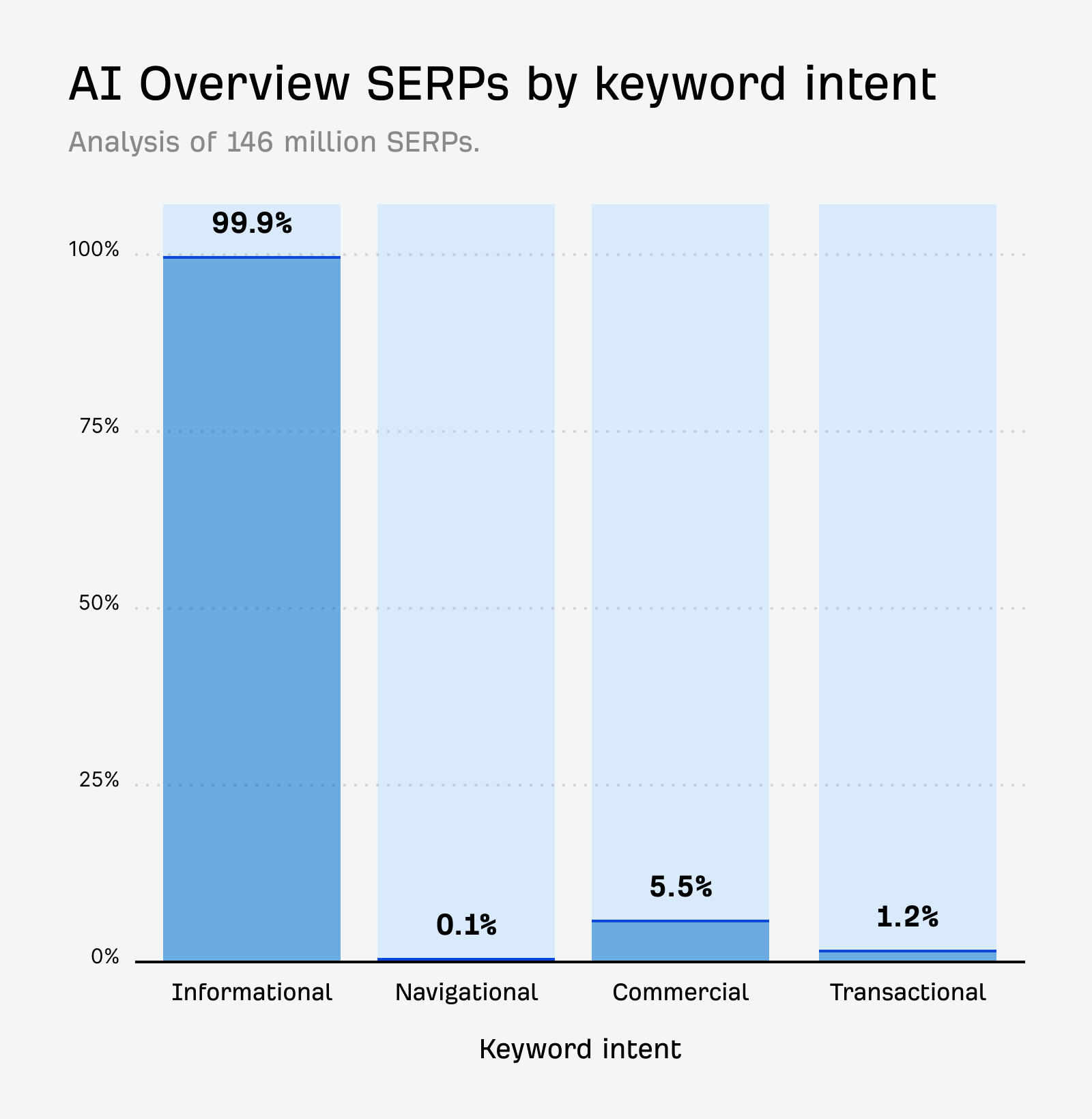
Why does all of this matter? Because understanding which queries trigger AI Overviews can help you figure out which content types and topics to target if you want to rank.
For example, if your focus topics are all informational, you’ll face more AI Overview competition—but you’ll also have more opportunities to get cited.
Start by using Ahrefs Keywords Explorer to search for question-based keywords ² in your industry ¹.
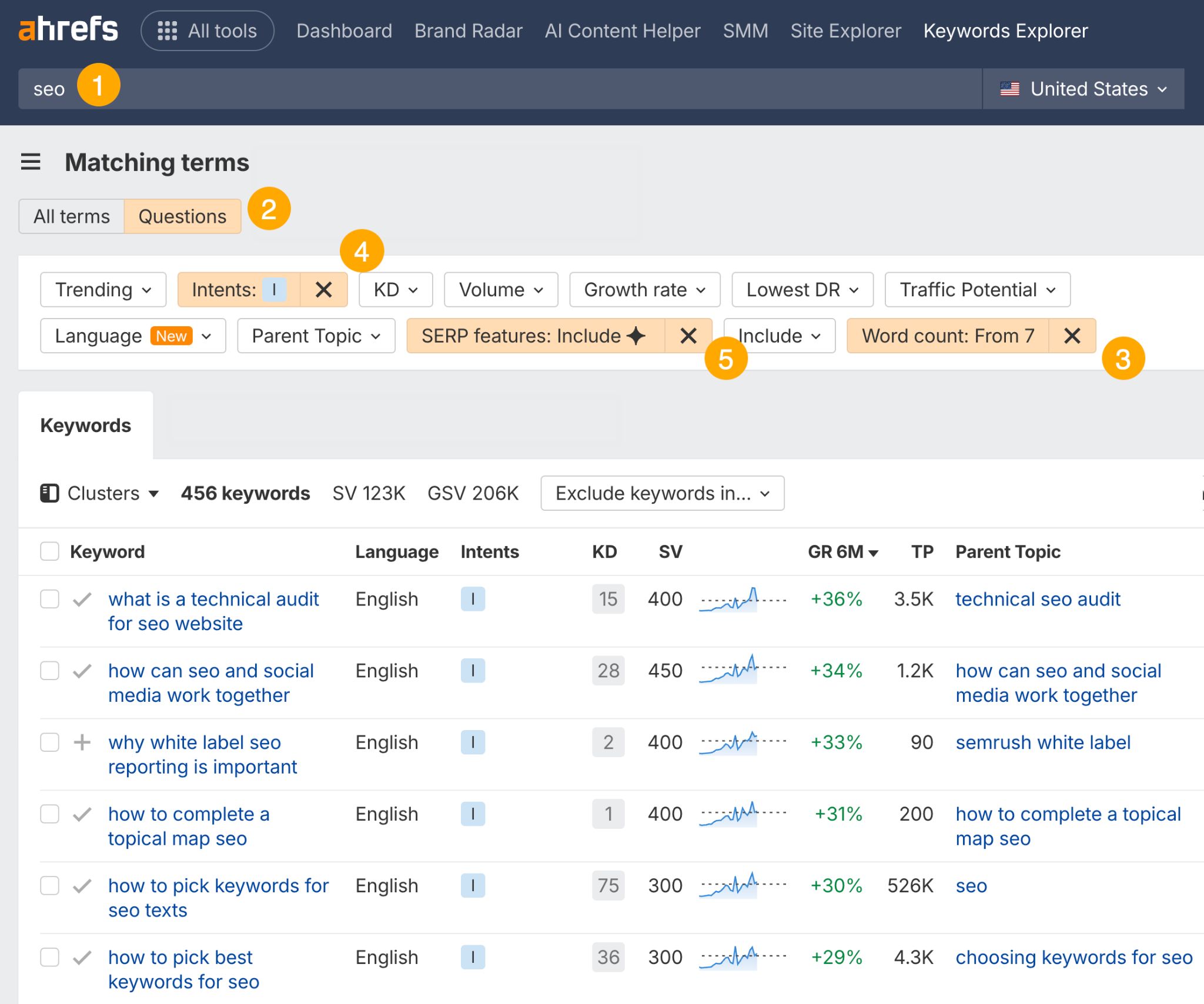
Then filter for queries with 7+ words ³ and informational intent ⁴, then check which ones already trigger AI Overviews ⁵.
The more you own these informational, question-based topics, the more real estate you’ll claim in AI Overviews.
If you’re not visible in traditional search, you’re unlikely to appear in AI Overviews.
Our analysis of 1.9 million AI Overview citations found that 76% can also be found ranking in the top 10, with the median ranking for top-cited URLs being position 2.
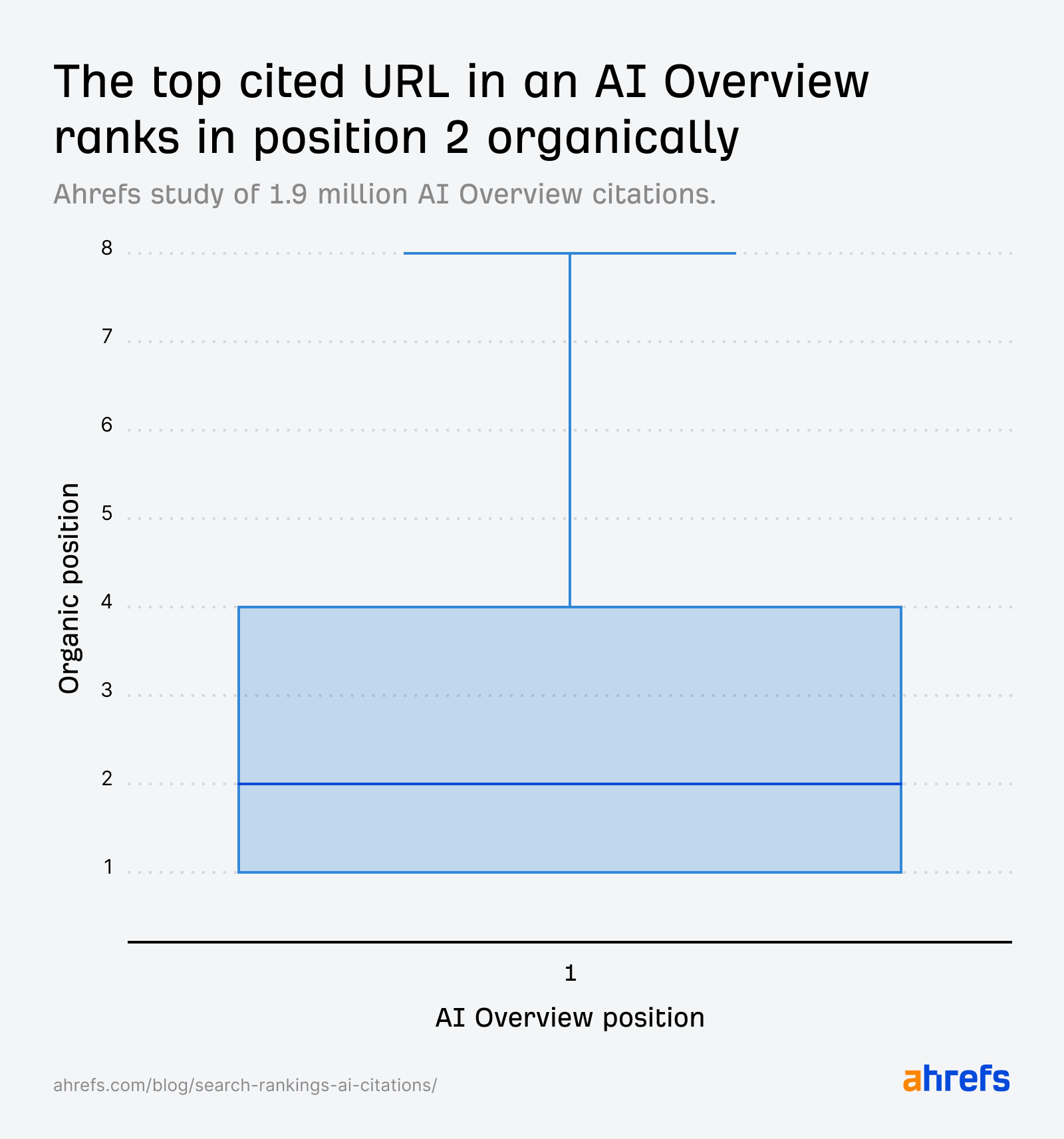
This makes sense given how AI systems work. They use retrieval augmented generation (RAG), pulling from search engine indexes to supplement their training data.
If Google doesn’t surface your content in traditional search, AI Overviews likely won’t either.
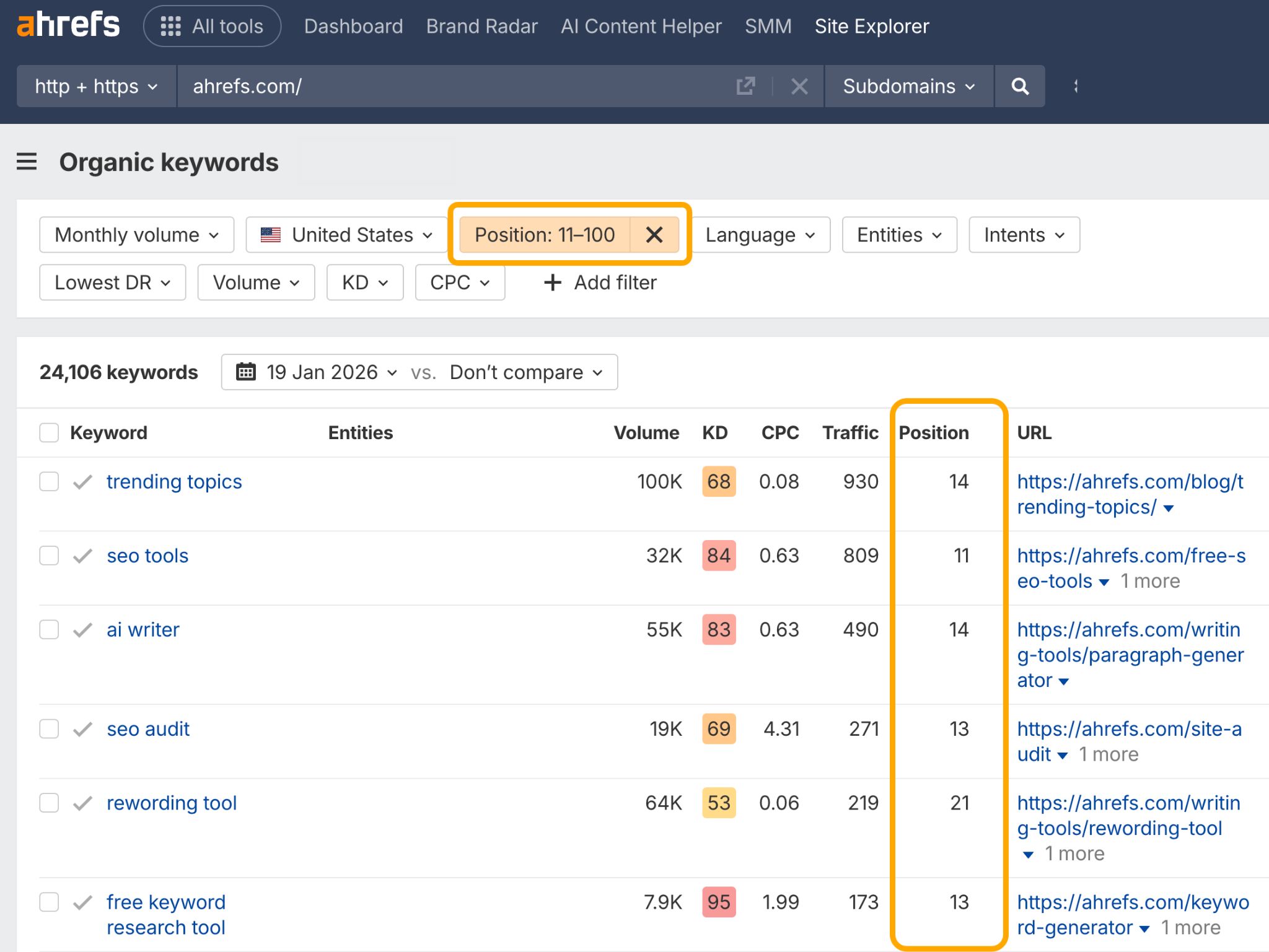
Use the Organic Keywords report in Ahrefs Site Explorer to check where your target pages rank for relevant keywords.
If you’re sitting outside the top 10, focus on improving those rankings first.
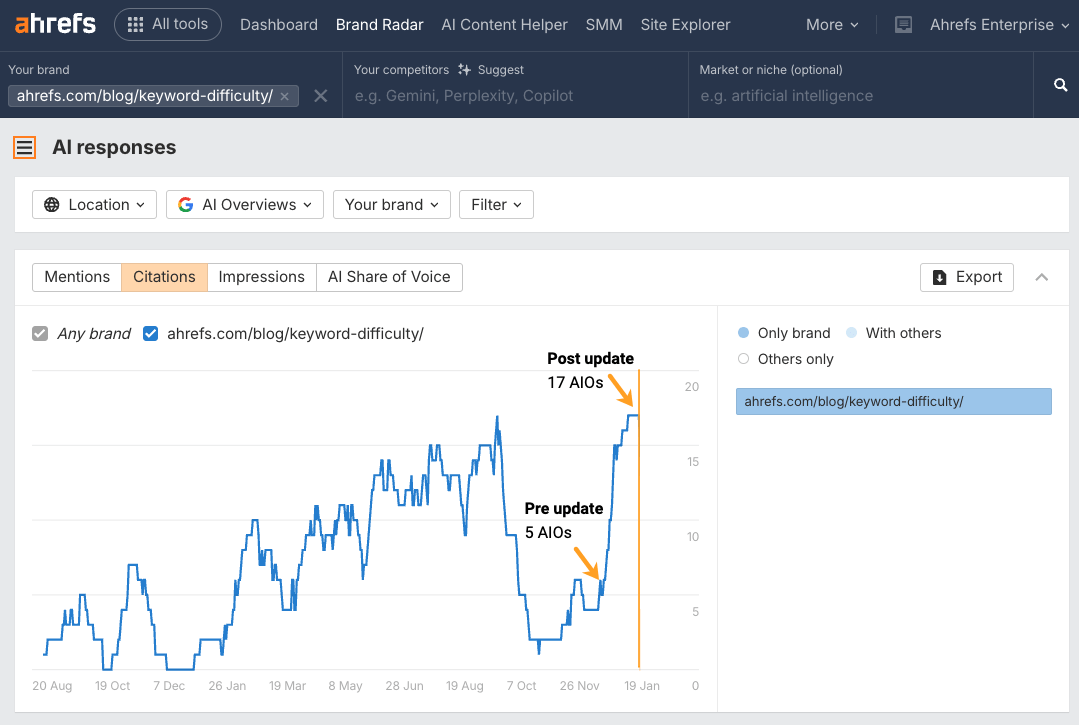
Then track your target pages in Ahrefs Brand Radar to see whether your optimizations in search are having a knock-on effect on your AI Overview visibility.
For example, since updating and better optimizing one of our blogs, I’ve managed to re-claim 12 AI Overviews.
AI Overviews don’t care how long your blog is—they care how well your content answers the query.
Our research shows near-zero correlation (Spearman ~0.04) between word count and AI citations.
Your main goal should be to answer the user’s query directly and early on—burying the lede just delays a Large Language Model’s (LLM’s) semantic understanding of your content.
For example, a few months back I updated a piece of declining content. I thought I was improving it by adding in more information, filling in topic gaps, and generally making it more comprehensive.
But when I checked back the traffic had dipped even further than before.
With the help of Ahrefs Page Inspect, Keyword Explorer data, and Claude, I realized I’d diluted the potency of the original content by adding in too much unnecessary detail.
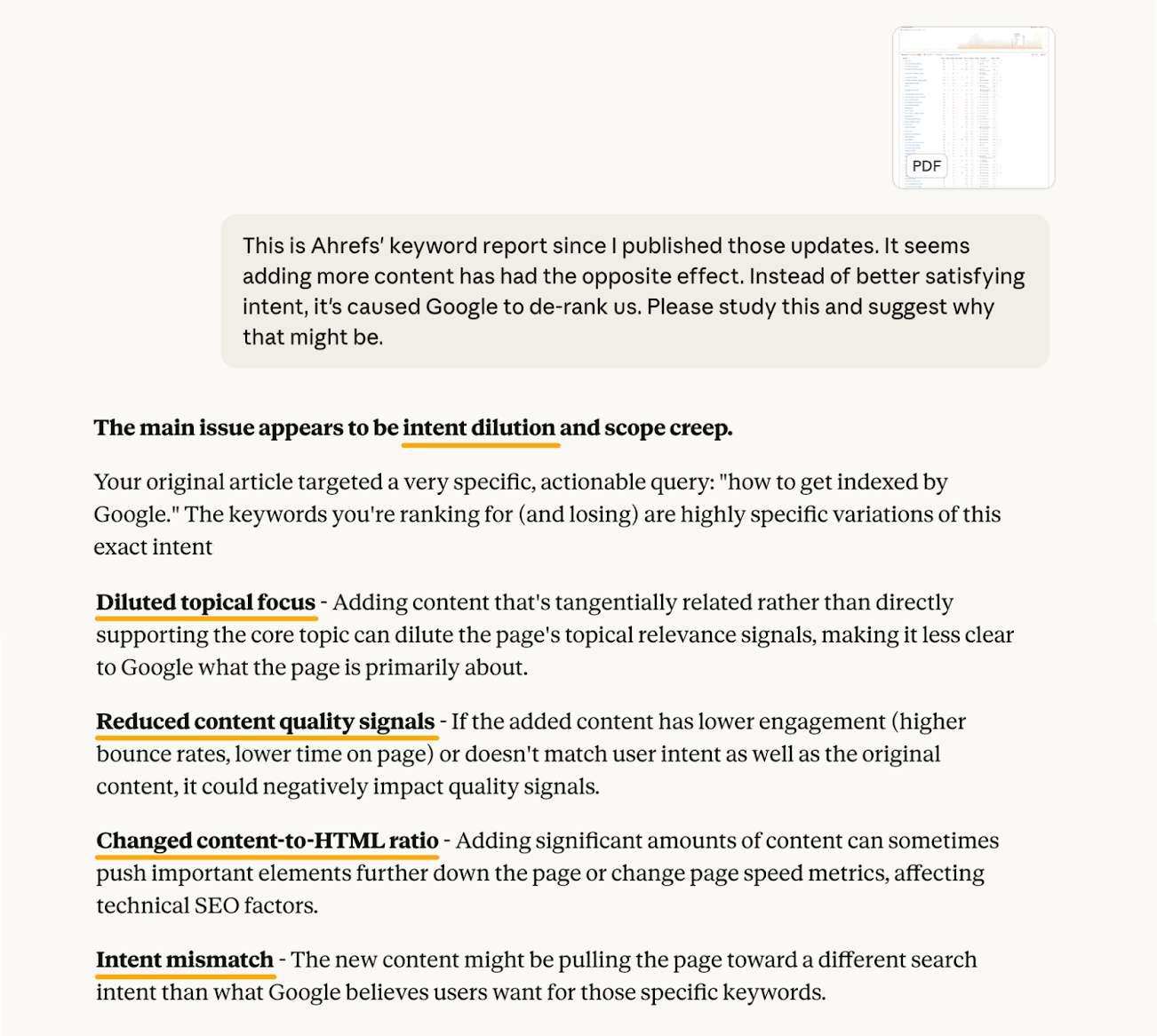
While I had edited the blog to better answer the query, I’d also added new sections on tangentially related topics.
But this ended up being too much excess information for a fairly straightforward question.
I had inadvertently diluted the focus, created an intent mismatch, and buried important information further down the page.
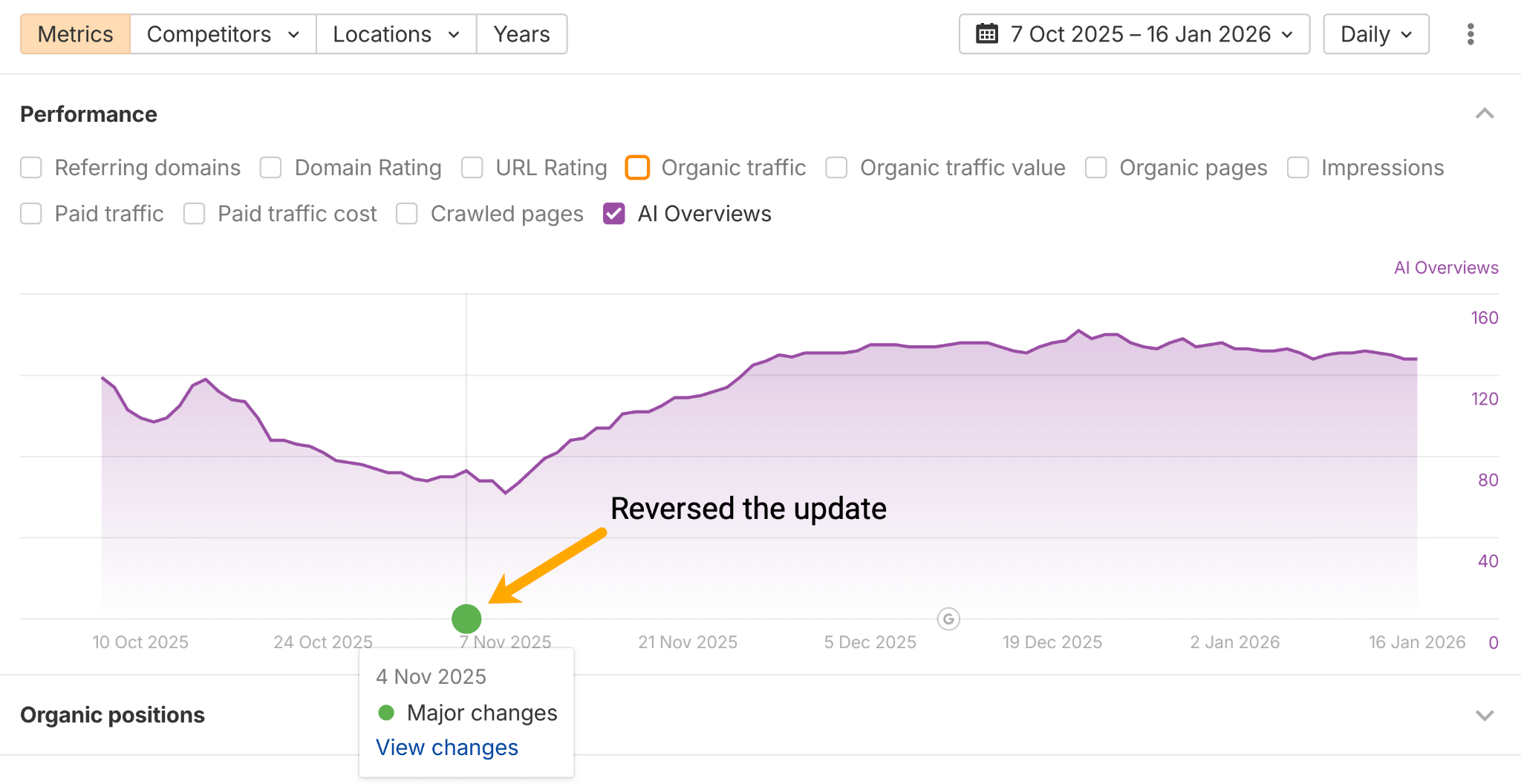
As soon as I reversed my updates, AI Overview visibility began to rise again.
In Dan Petrovic’s latest study on Google’s “grounding” (the SERP content Google uses as source material when generating AI Overviews), he realized that intent dilution is a real issue.
Analyzing over 7,000 queries, he found that grounding plateaus at ~540 words, and that pages over 2,000 words see diminishing returns.
“Adding more content dilutes your coverage percentage without increasing what gets selected… The implication for content strategy is clear: density beats length. Focus on being the most relevant source for a query, not the longest.”

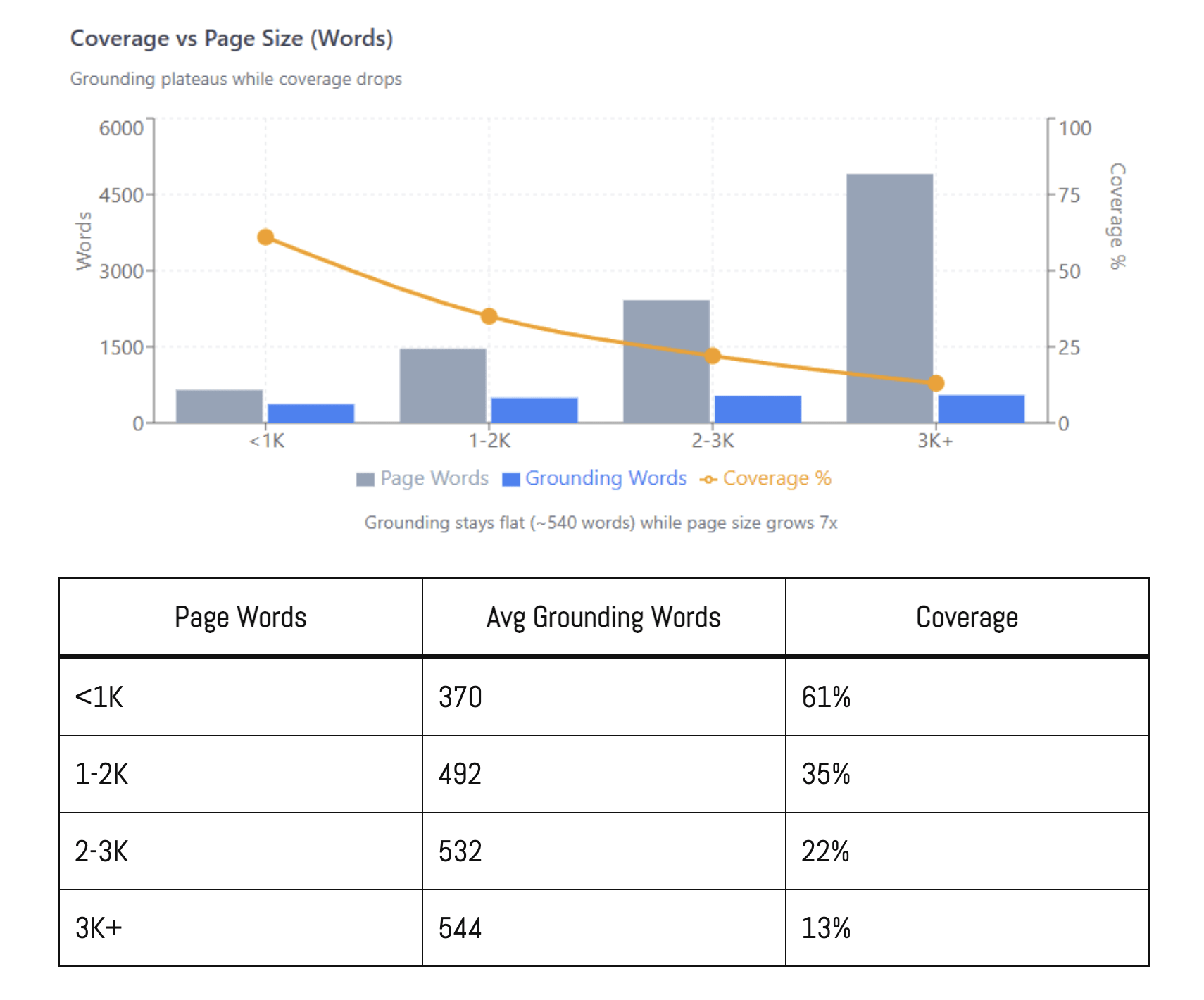
So, the moral of the story is, don’t target a specific word count, and don’t just add more content to hedge your bets. Let the topic and intent dictate how much content you write.
Here are three ways you can better optimize for the right search intent.
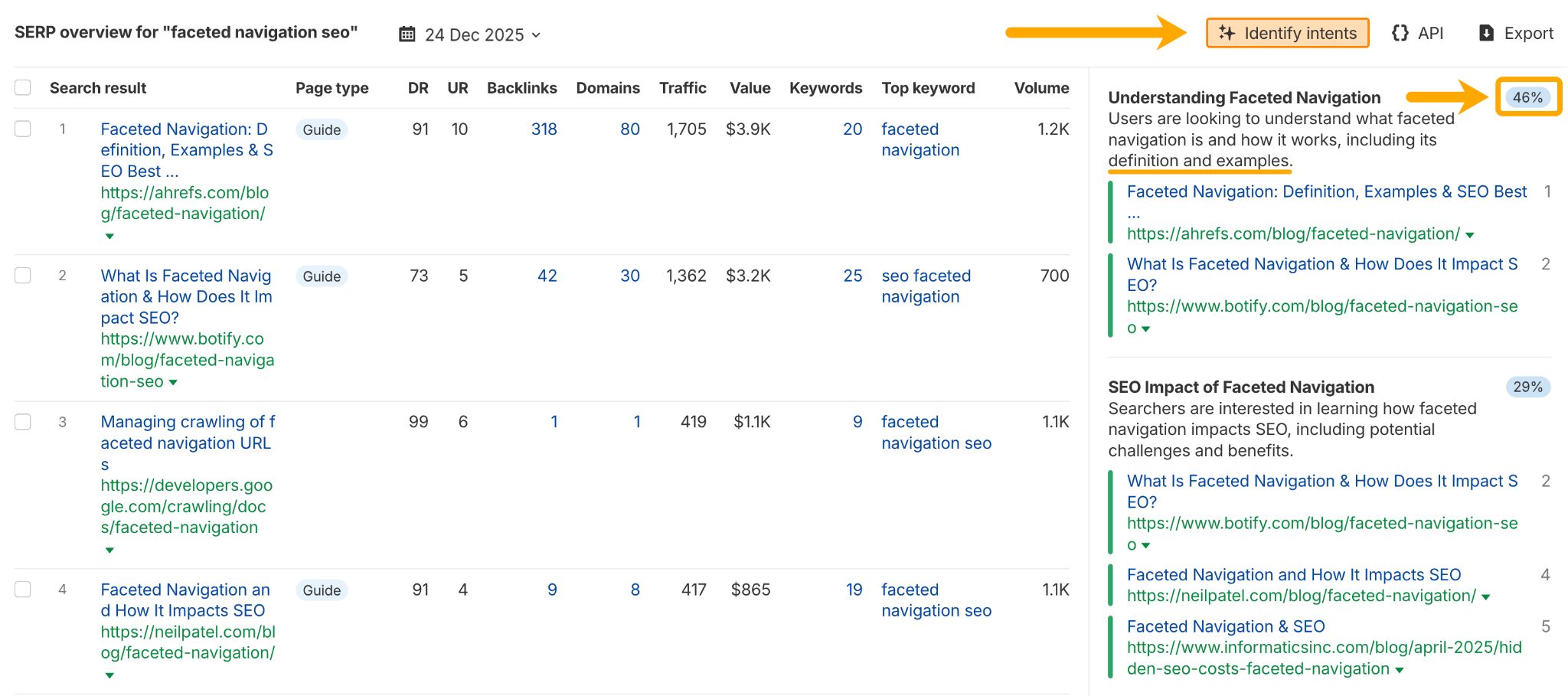
1. Use Ahrefs’ Identify Intents tool in Keyword Explorer to study the intent breakdown of the SERP. For example, 46% of search results for the query “faceted navigation SEO” are definitions and example guides that help users to understand faceted navigation, so it makes sense to create that kind of content if you want to rank and be in with a chance of claiming an overview.
2. Choose a dominant search intent in Ahrefs’ AI Content Helper, then just write in alignment with the topic recommendations.
3. Use tools like AlsoAsked or AnswerThePublic to find questions behind short-tail keywords, and better understand what users want to know when they search a query.
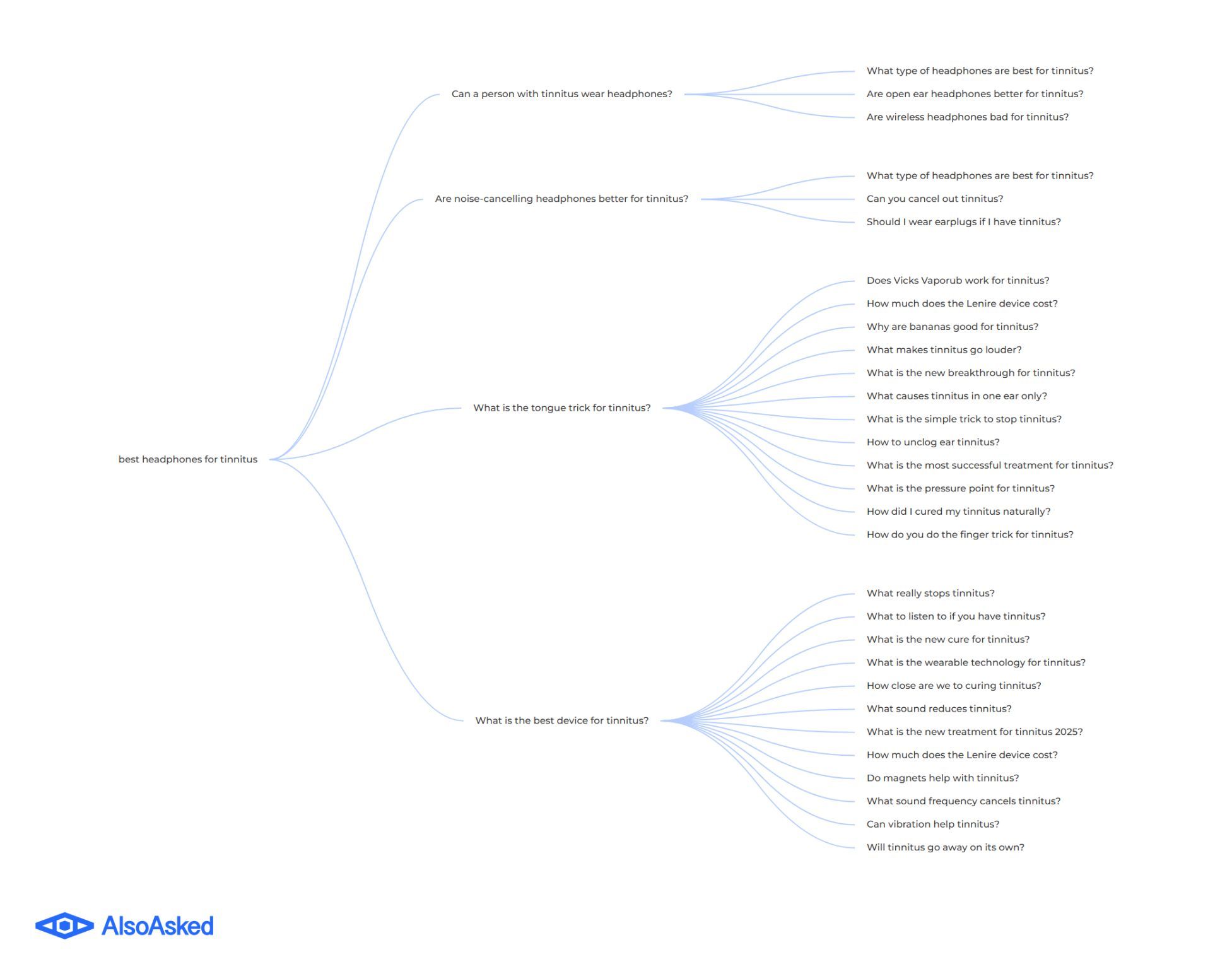
Research suggests that you can improve your ranking in AI Overviews by showing up more often in “fan-out query” SERPs.
What is a fan-out query? Well, according to Google’s official documentation, whenever a user searches in Google and AI is triggered, the system performs a “Query fan-out” breaking a single query into multiple related sub-queries.
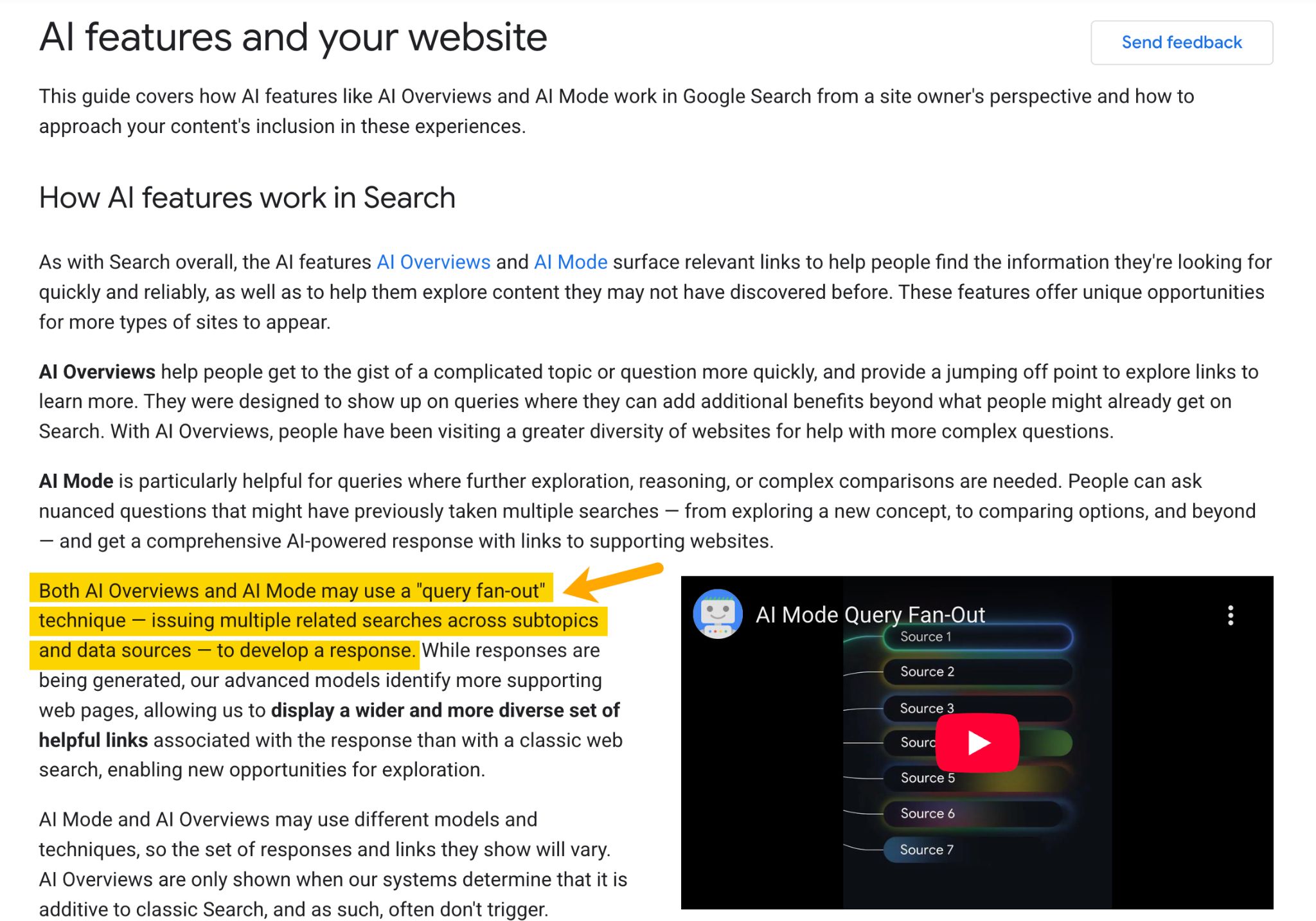
For a user prompt like “What will happen if I swap out regular flour for wholemeal flour in a lemon drizzle?” an AI might generate fan-out queries such as “best flour for lemon drizzle cake”, “how does wholemeal flour affect cake density” and “baking with wholemeal flour tips”.
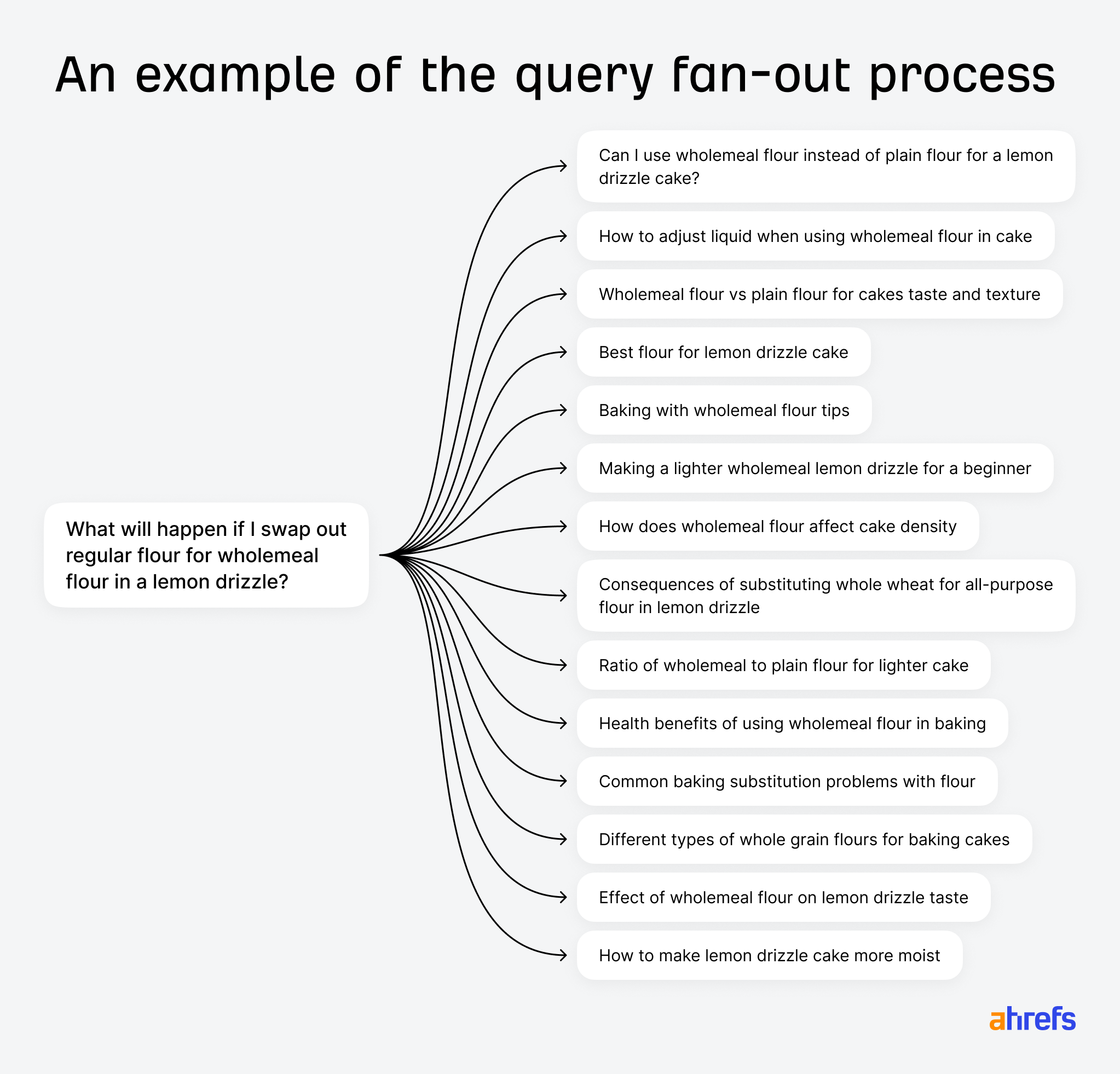
This allows Gemini—the model powering AI Overviews—to explore different facets of a topic, and retrieve passages from multiple sites to construct an answer.
According to Ahrefs alumni Joshua Hardwick—who recently researched fan-out query behavior in AI Overviews alongside SurferSEO—pages that rank across these fan-out queries are 161% more likely to be cited in the final AI Overview than pages that only rank for the primary search term.
Josh also found that the Spearman correlation between ranking for fan-out queries and being cited in an AI Overview is 0.77—i.e. Very strong.
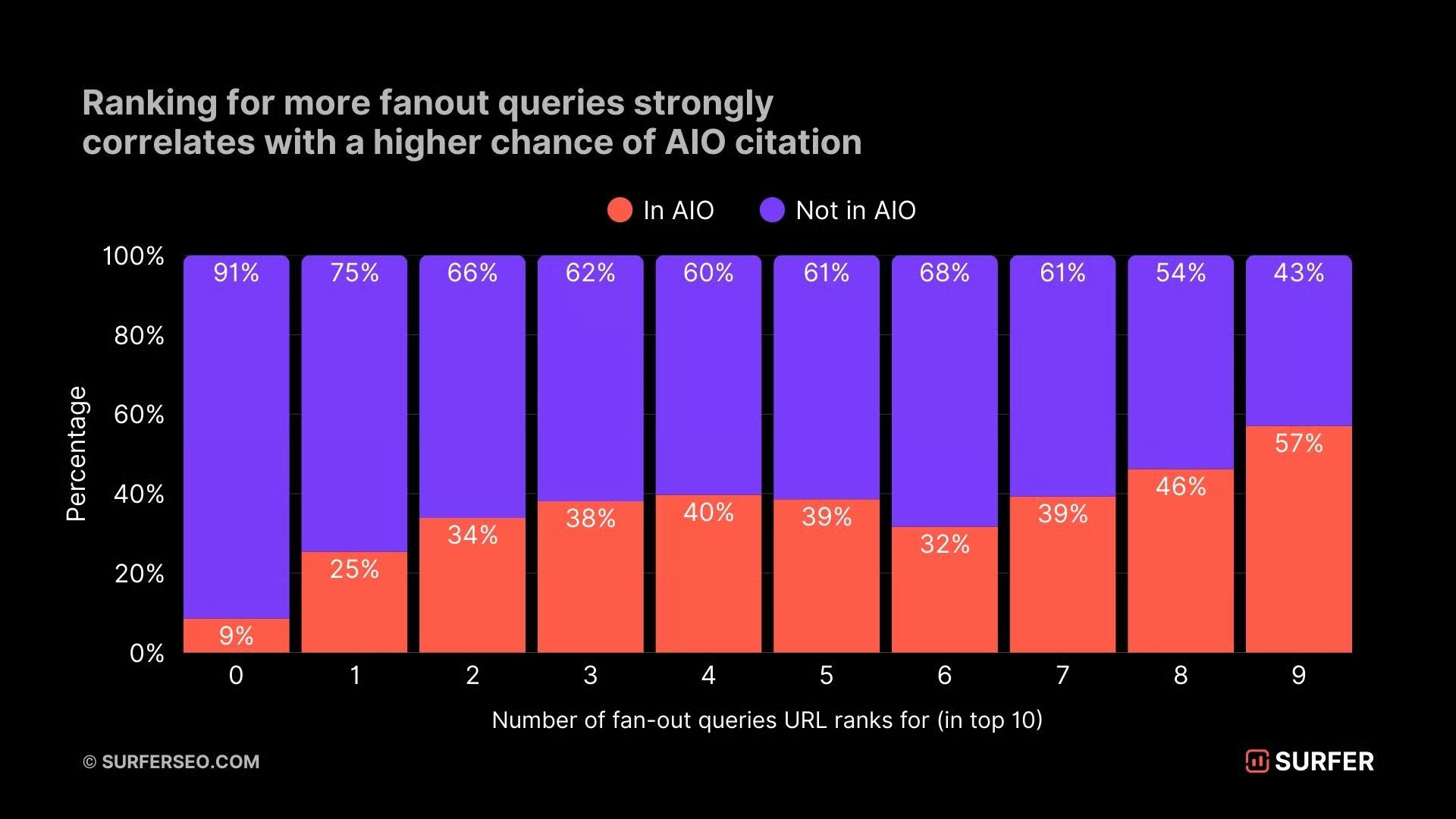
It’s pretty clear: Ranking in AI Overviews is about building deep topical authority.
Don’t over-focus on individual keywords or isolated citations. Write content that covers multiple aspects of your target topic, to improve your chances of showing up in fan-out query SERPs.
A practical way to do this is to optimize for fan-out queries directly—which is exactly what Dan Hinkley at GoFish Digital has done.
Using the Gemini API and Screaming Frog to extract Google’s fan-out queries, Dan has created a Python script you can copy + paste to:
- Crawl certain pages on your site (i.e. the /blog/ subfolder)
- Use Screaming Frog to extract the H1 from each page
- Send those H1s to Gemini
- Extract both the AI Overview response and a list of related fan-out queries for each H1
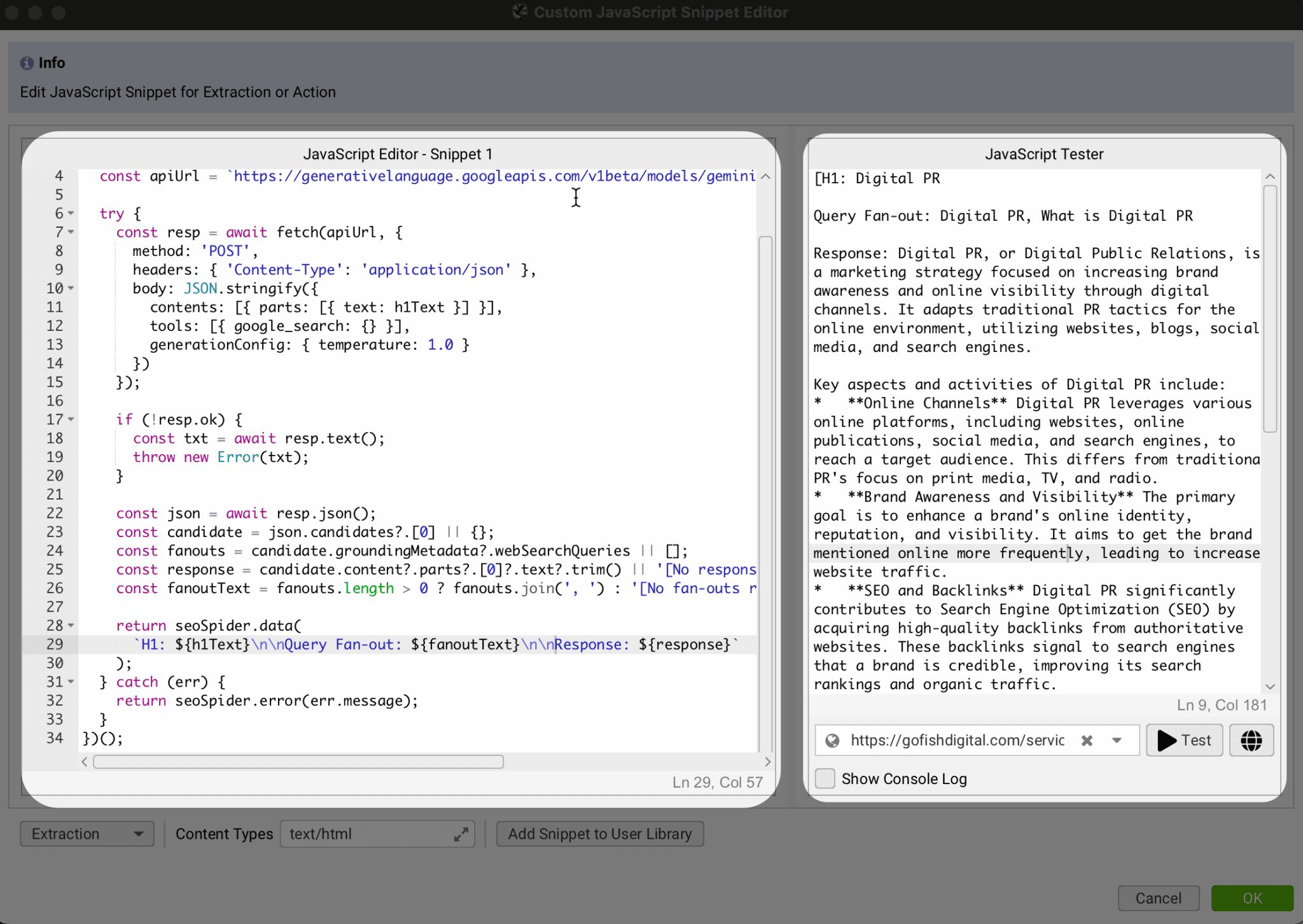
Here’s another, even easier way to extract AI Overview fan-outs.
Qforia is a free tool created by AI expert and iPullRank Founder, Mike King.
It is modeled on one of Google’s official retrieval patents and essentially replicates Gemini’s fan-out query process—which involves using Gemini itself to generate those queries.
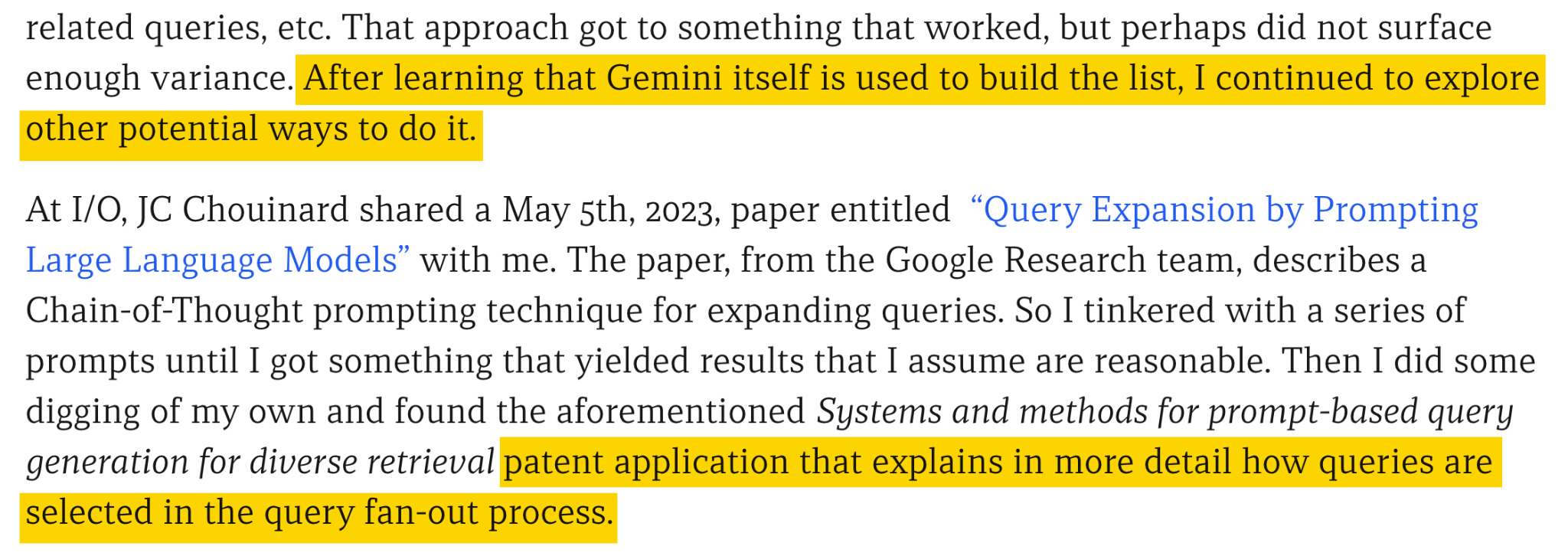
Extract from How AI Mode Works and How SEO Can Prepare for the Future of Search
You just enter the keyword you want to optimize for ¹, drop in your free Gemini API key ², and hit “Run fan-out” ³.
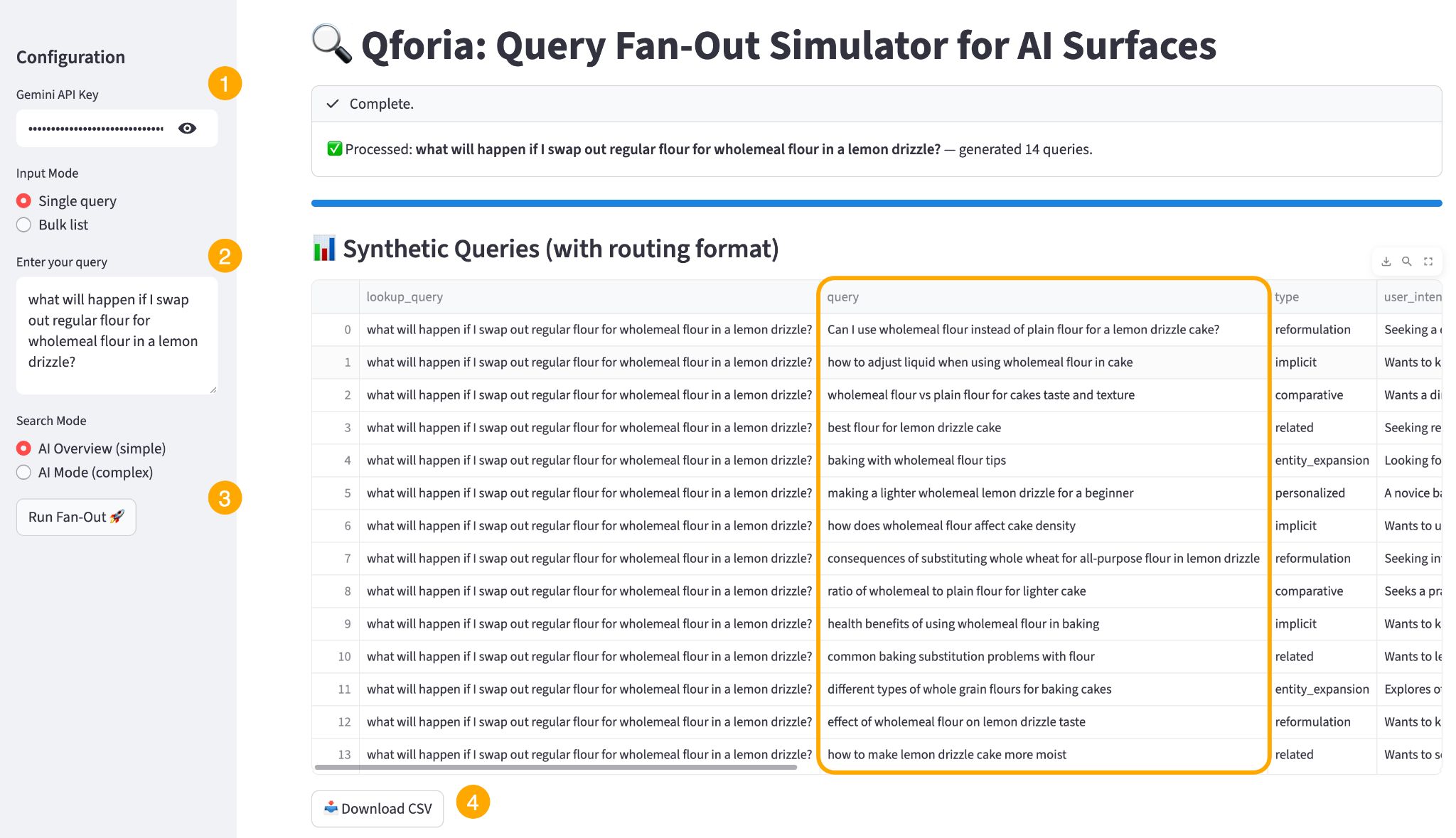
Then “Download CSV” ⁴ and begin optimizing your content around those more detailed sub-queries.
Mapping fan-out queries to your existing content can help you find topic gaps and build authority across as many related queries as possible—covering every angle Gemini might explore.
Here are three more ways you can build authority at the topic level:
1. See what topics AI Overviews currently associate your brand
Add your brand to Brand Radar, head to the Topics report and see which themes AI Overviews currently associate with your brand
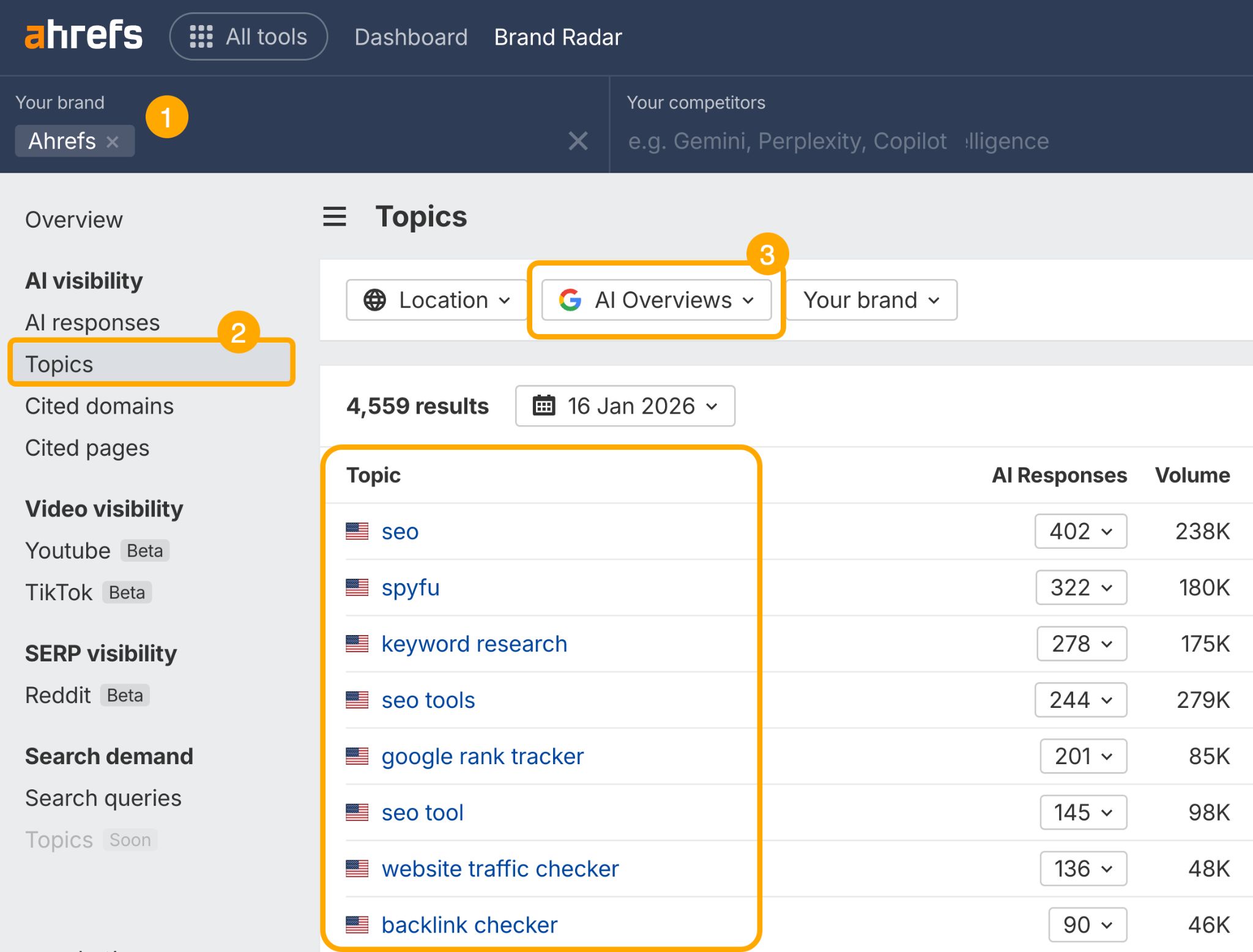
Then spot gaps between where you want to be (your target authority topics) vs where you are in AI’s perception.
2. Check for topic and entity gaps in AI Overviews
Here’s a nifty workflow from Rodrigo Stockebrand, Global Head of SEO at Entain, and former Head of SEO at NASA.
He exports non-branded AI Overview keywords and Entities from Ahrefs Organic Keywords report in Site Explorer…
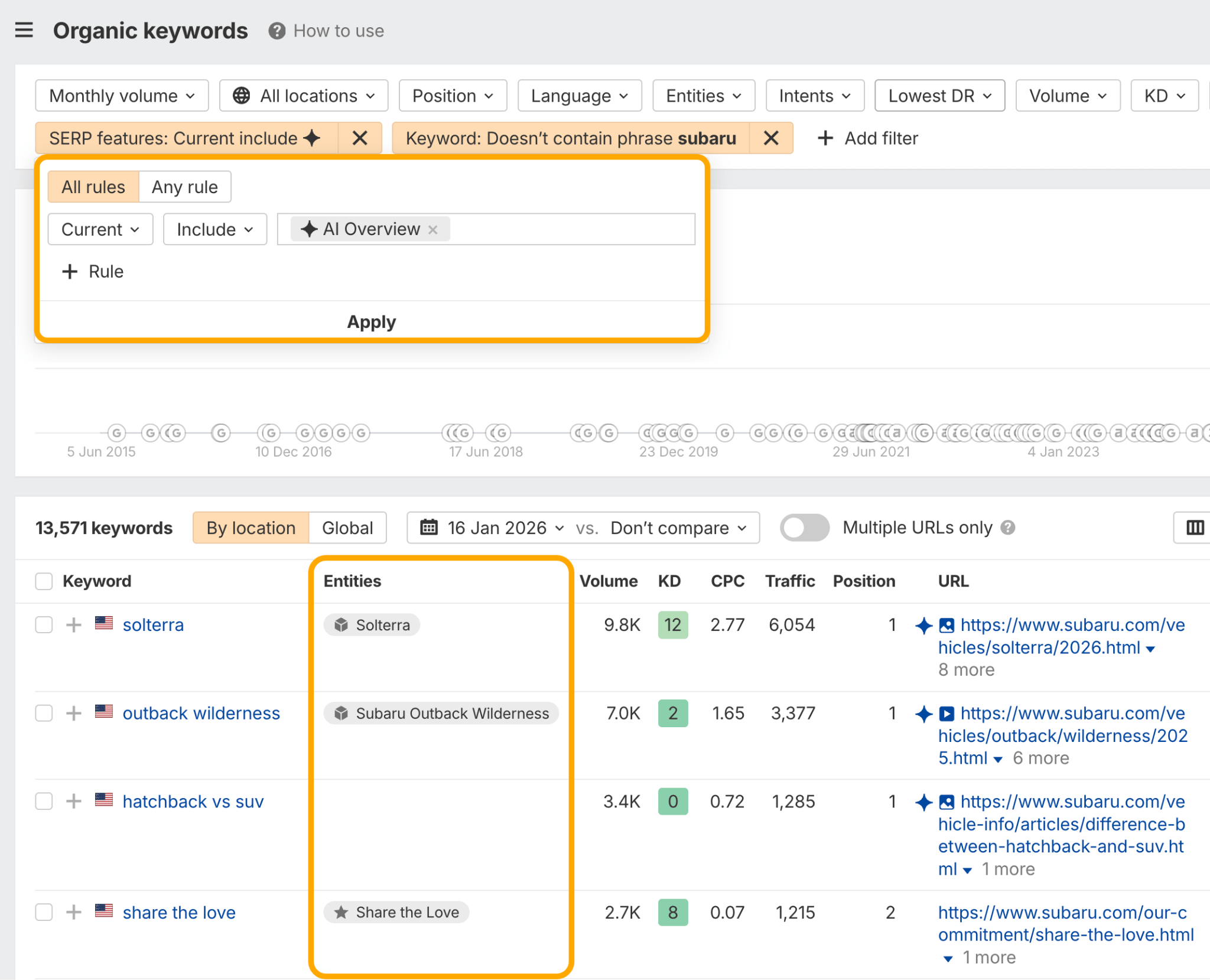
Then he uses Poe/AI studio to build network graphs showing which entity clusters appear in AI Overviews—and which don’t.
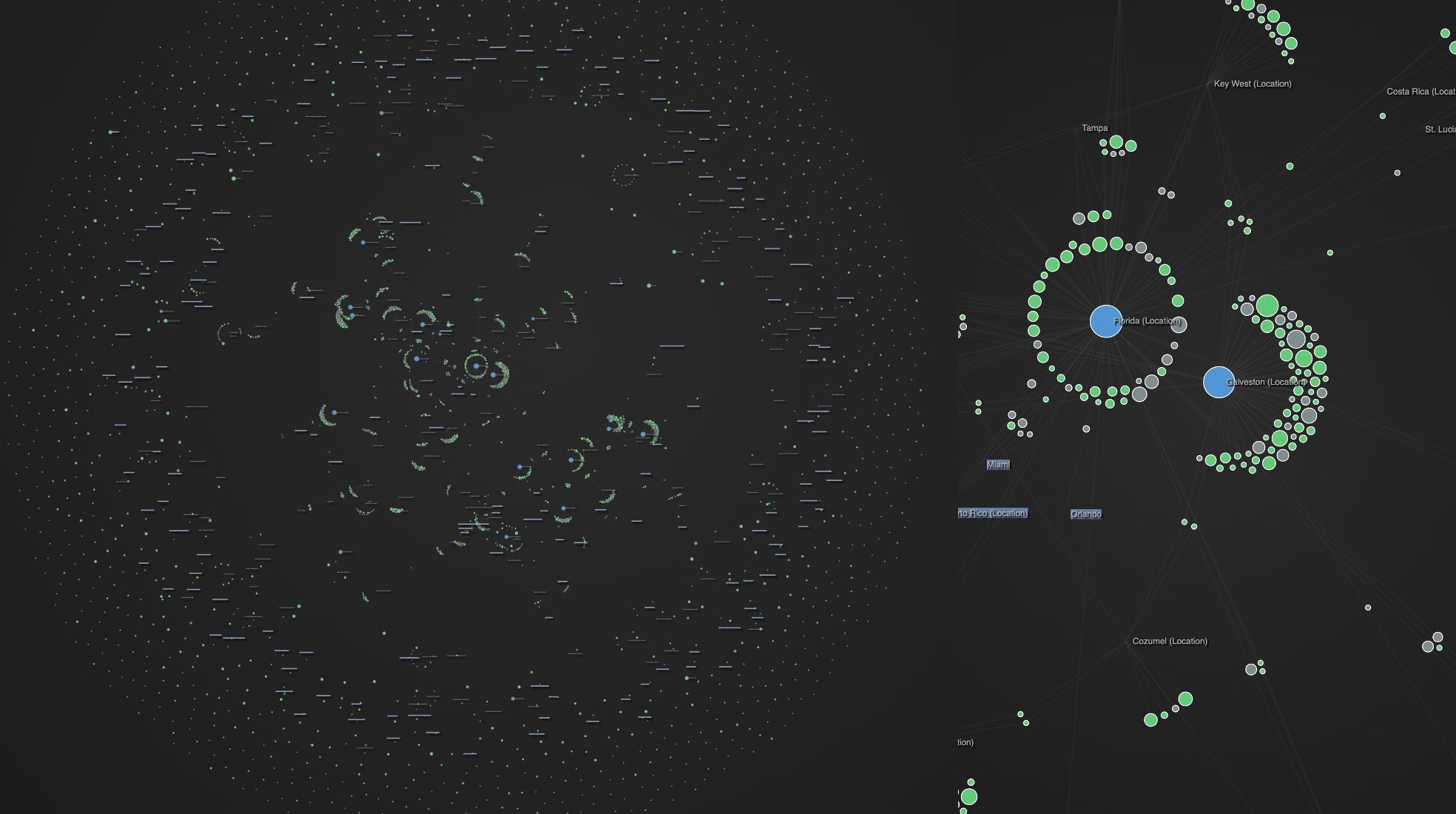
- Blue circles: main entities that other keywords connect to
- Grey circles: related keywords that are not mentioned or cited in an AI Overview
- Green circles: related keywords that are mentioned or cited in an AI Overview
- Size: Monthly search volume of that particular keyword
Rodrigo’s is now working through this entity audit, attempting to flip the grey circles to green. Here’s how you can replicate his workflow:
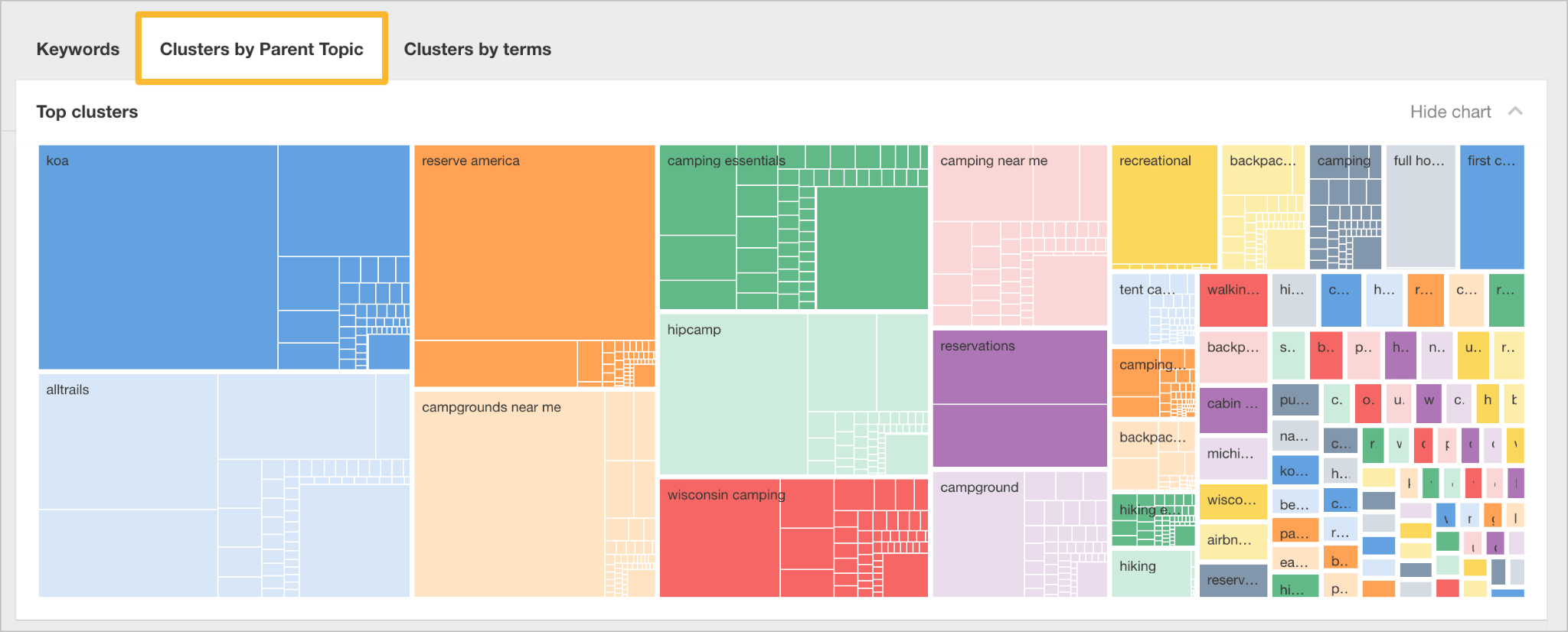
3. Build content clusters
Use it to find and cluster your content around related themes—NOT just single keywords.
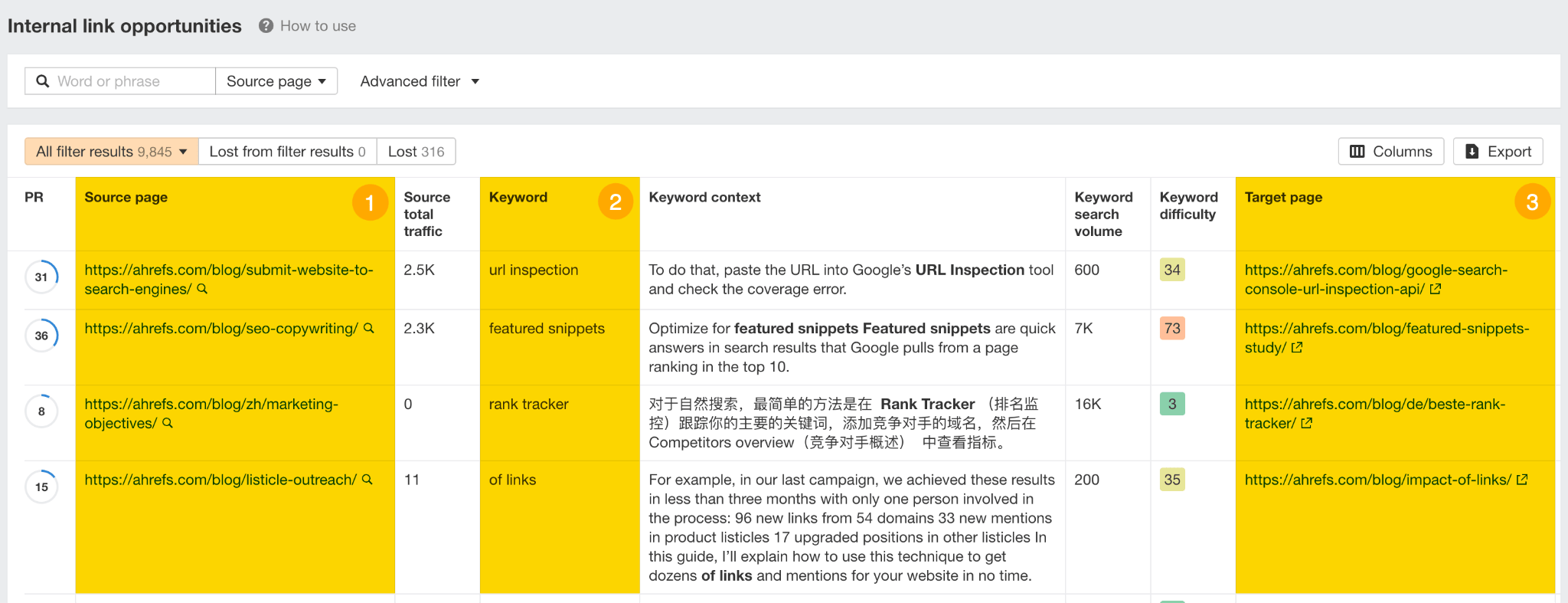
Once you’ve built out your content clusters and optimized any existing ones, use the Internal Link Opportunities report in Site Audit to build stronger associations between each page.
This report works by looking at the top 10 keywords for each page and finding mentions of them on other pages, giving you ready-made link recommendations.
AI Overviews favor brands with widespread recognition across articles, videos, and forums across the web.
This is why surround sound SEO matters—maximizing your “real estate” on high-intent search results pages (SERPs).
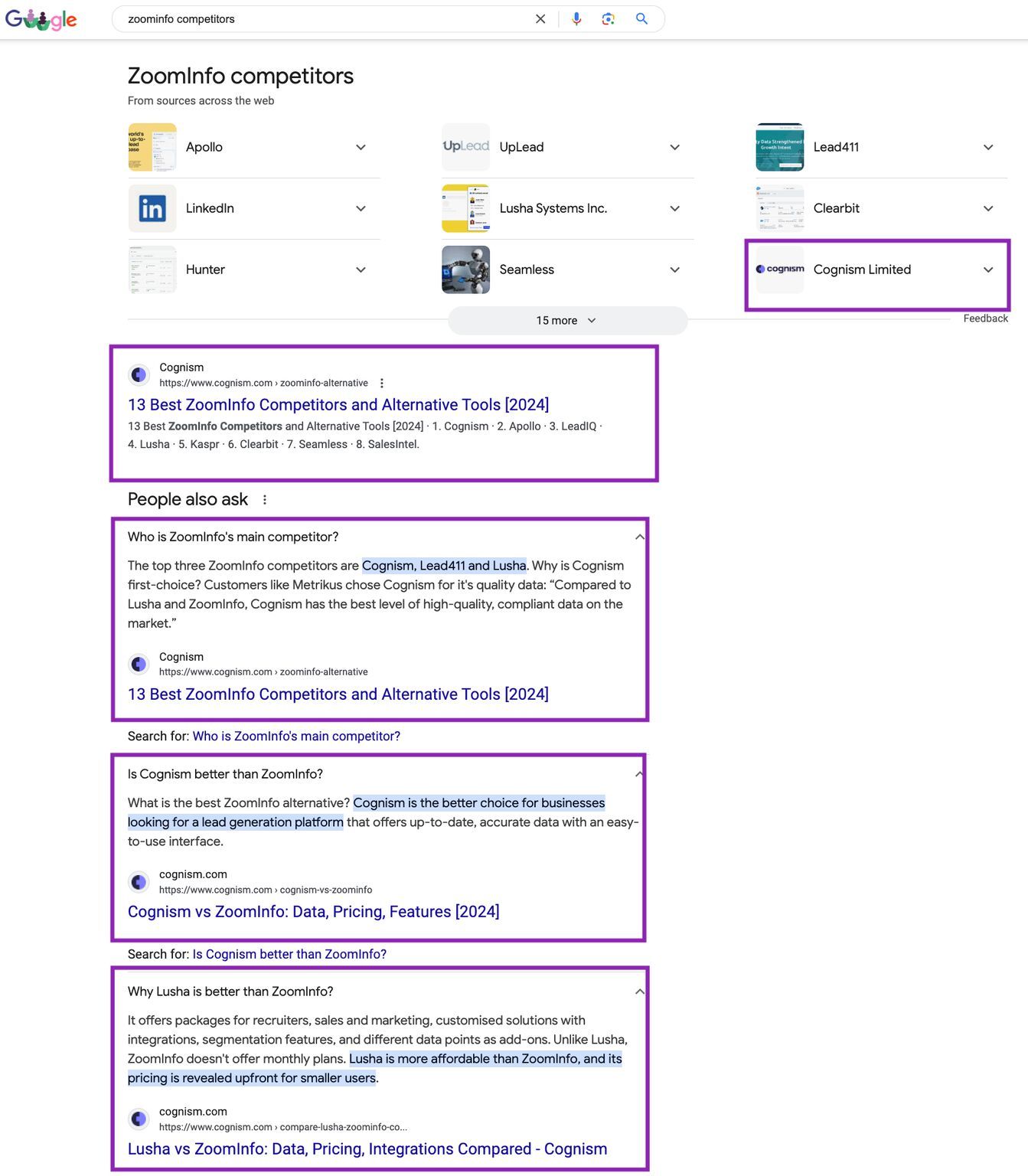
The more properties referencing your brand, the more chance you have of being mentioned or cited in an AI Overview.
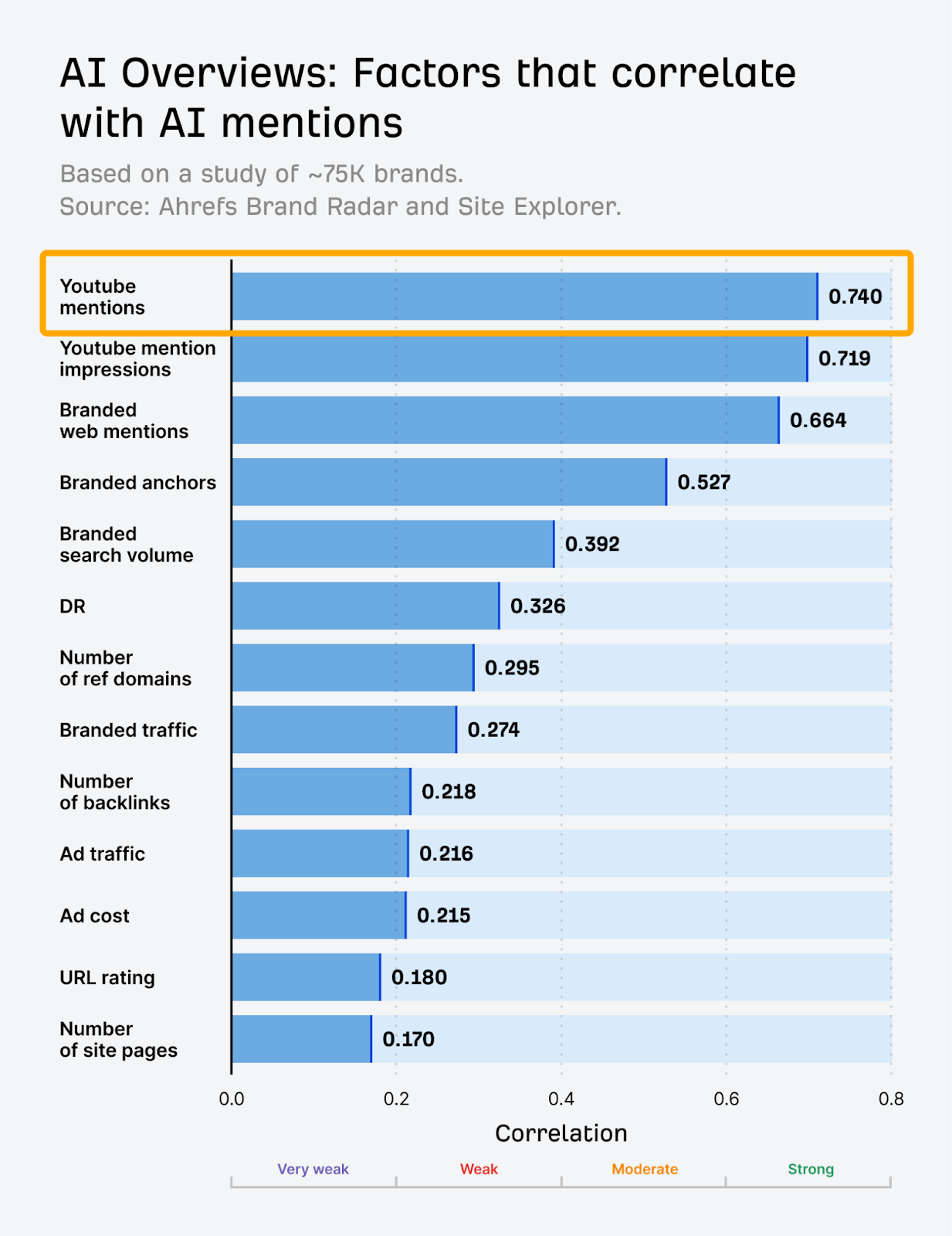
According to our own research, brand mentions are the number one correlating factor with AI Overview visibility.
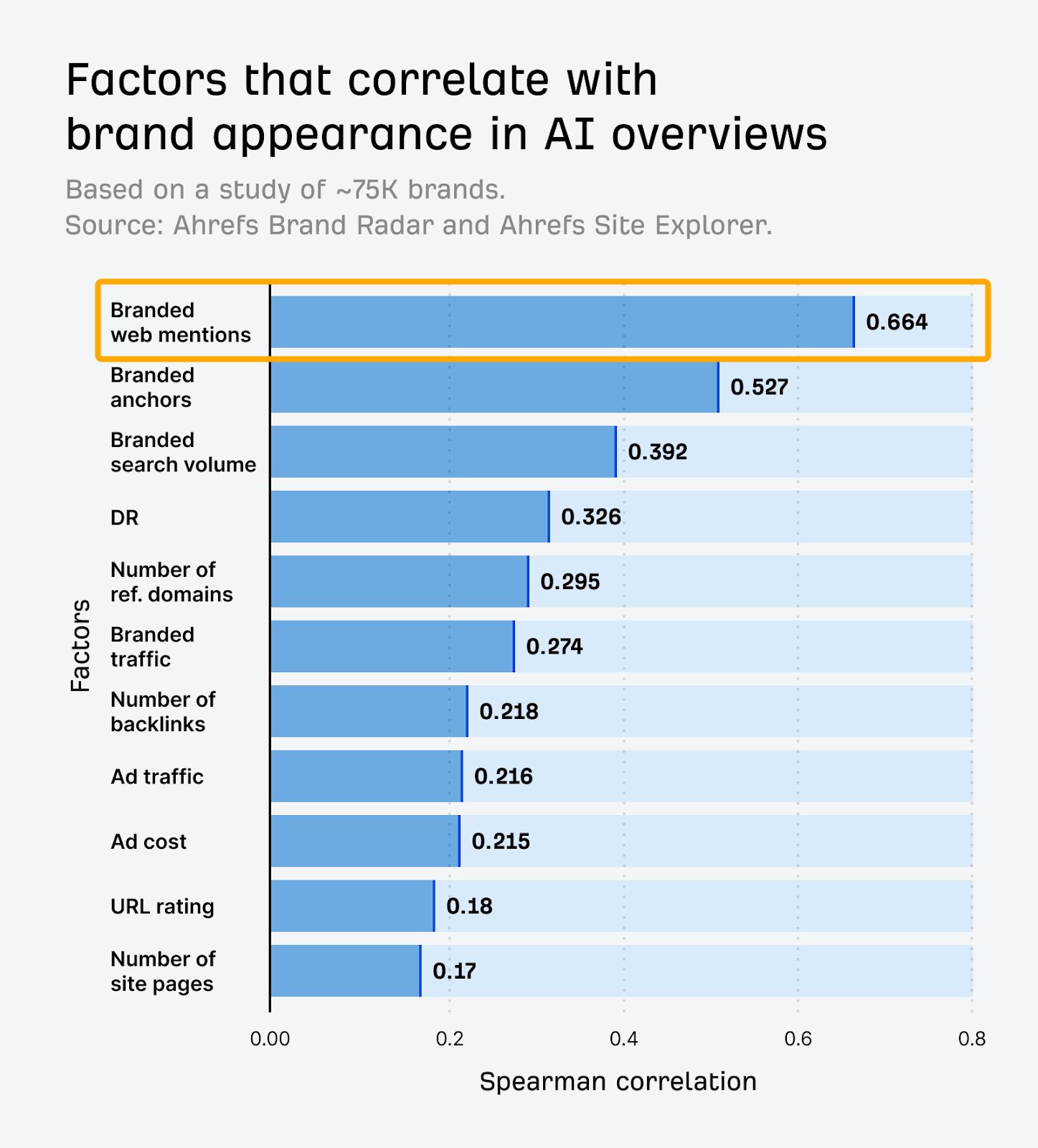
So, how can you proactively build your off-site brand mentions?
Outreach for mentions in “best lists”
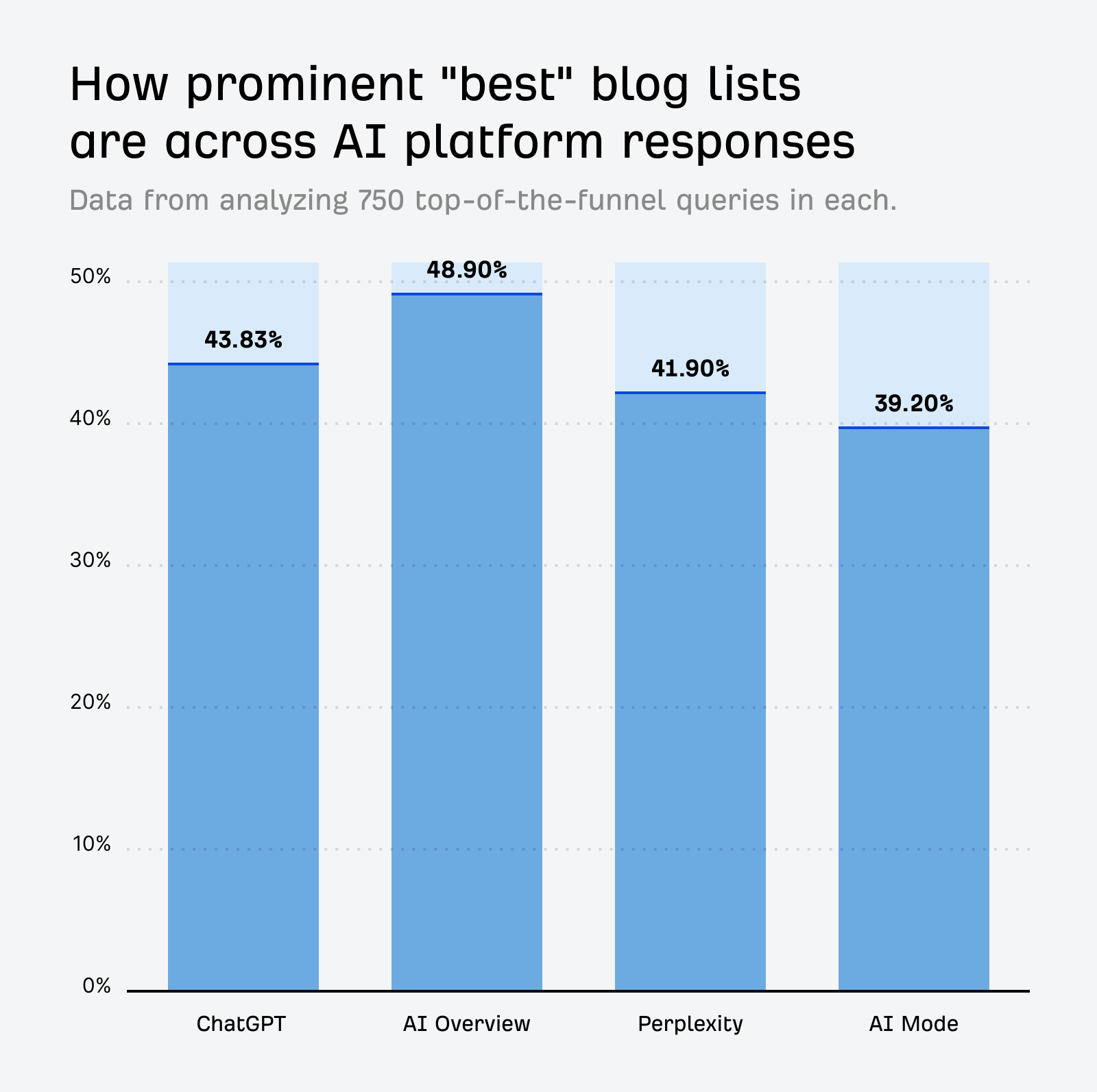
Glen Allsopp, our Head of Marketing Strategy & Research, did some great research into the efficacy of “best lists”.
He found that Google AI Overviews strongly favor “best” posts, with nearly 50% of AIO citations falling into this category.
It’s important to remember that, while showing up in “best lists” can help with visibility, if the recommendations feel inauthentic they won’t result in positive brand recognition, user experience, or eventual ROI.
So, be selective when you do outreach for visibility on these lists. When possible, offer writers a demo or short-term trial (fully disclosed) so they can give an honest review.
And instead of pitching your brand for existing articles—and bargaining with writers to update their post with a mention of your brand—try targeting authoritative sites in your niche that haven’t written one yet.
Ask if they’d consider reviewing “best X products.” You could even:
- Do the keyword research on their behalf
- Pitch the traffic opportunity (i.e. your competitors are getting X visits from similar posts)
- Introduce your product and offer them a taster
That way you’re giving them a reason to include you by providing value, not just asking for favors.
Partner with YouTube creators for product features
In our latest brand factor study, we found that YouTube mentions show the strongest correlation with AI Overview visibility.
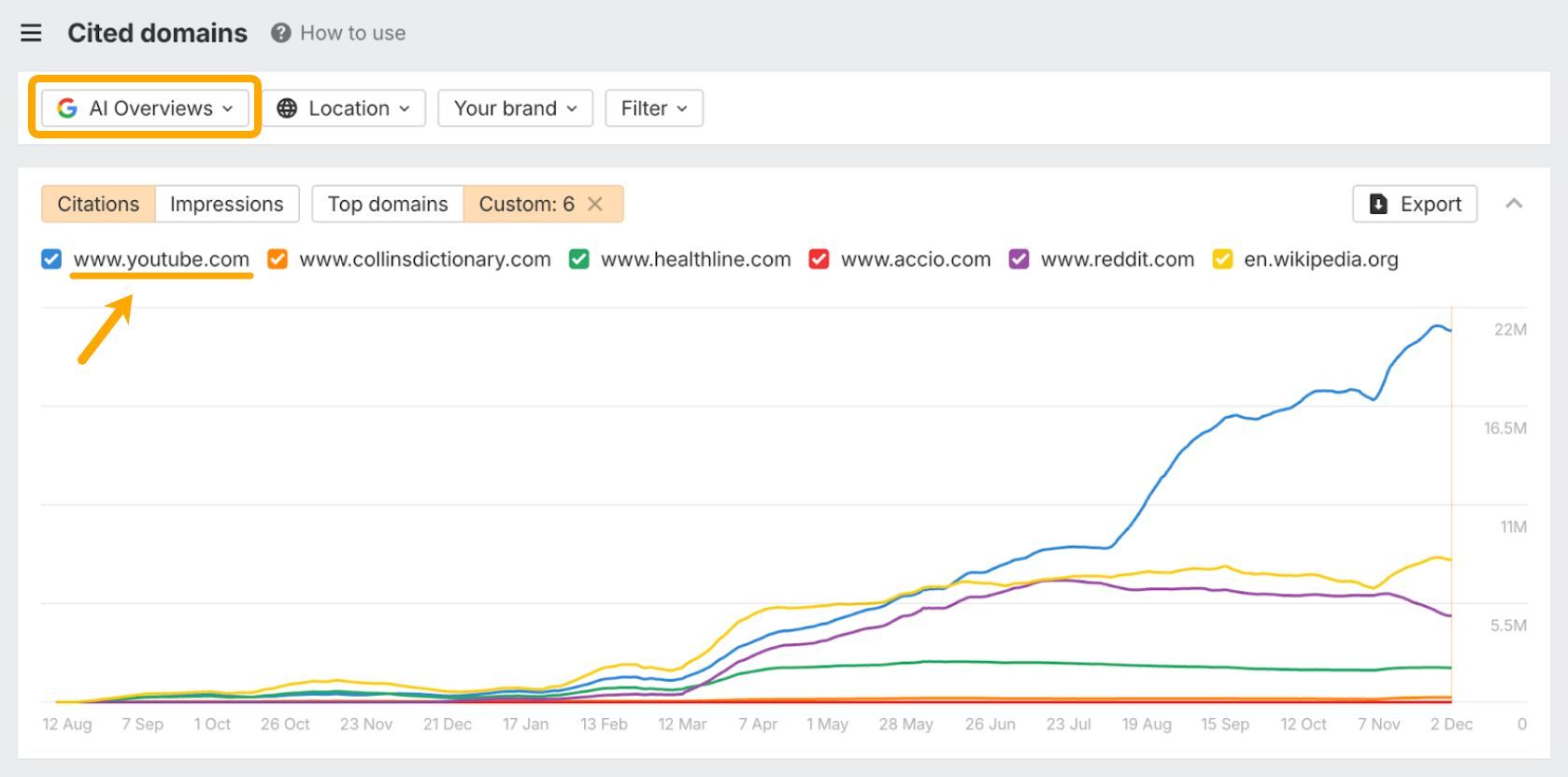
This makes sense since YouTube is the number one cited domain in AI Overviews according to Ahrefs Brand Radar.
Here’s how you can build partnerships on YouTube to claim more AI Overview listings:
- Look for channels producing tutorials, comparisons, or educational content where your product naturally fits.
- Pitch a specific video idea that serves their audience—like “setting up workflows for remote teams” if you’re a project management tool—rather than just asking for a review.
- Offer early access to features, exclusive data, or a thorough demo so they can integrate your product authentically.
But most importantly, you need to find YouTubers that are showing up in AI Overviews. If they’re mentioning your brand, that’s already a warm opportunity.
Track which videos drive AI visibility
Use Brand Radar to see which YouTube videos mentioning your brand actually appear in AI Overviews:
- Check the YouTube monitoring report and filter for relevant keywords
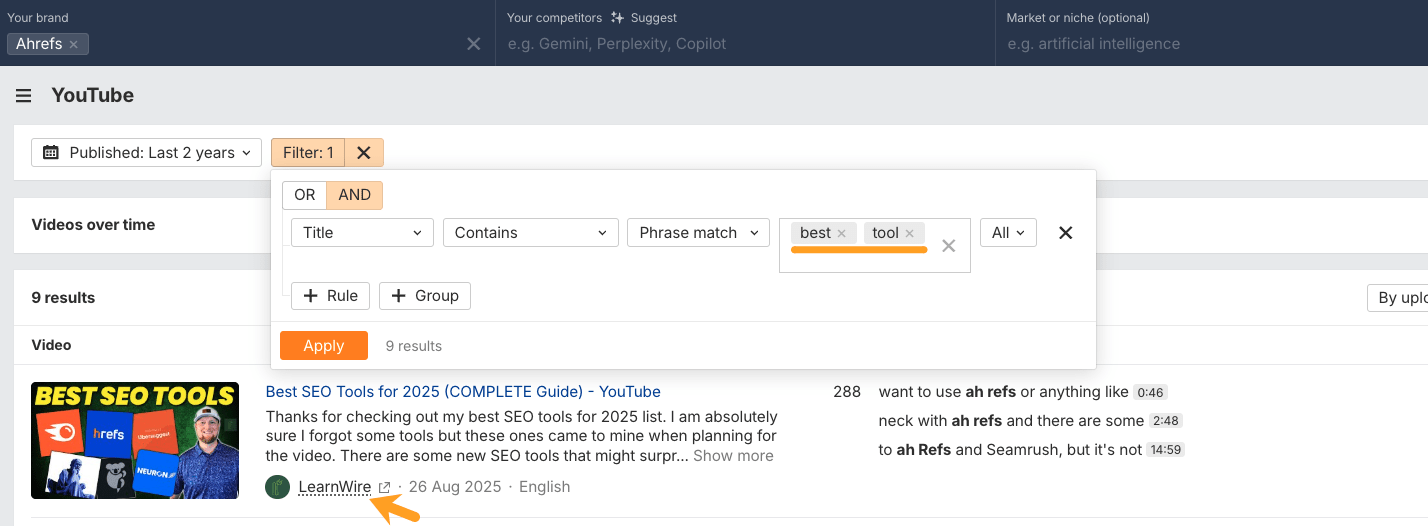
- Copy video URLs and drop them into a “URL > contains” filter in the main Brand Radar dashboard
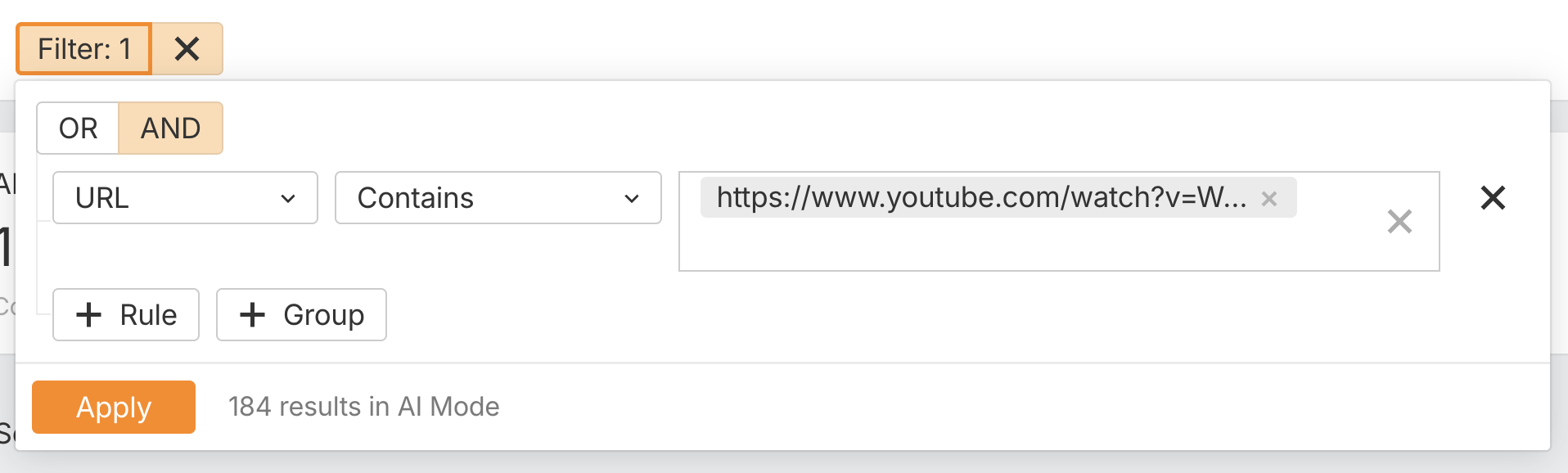
- See which videos trigger AI Overview citations. For example, this one video triggered as many as 30 mentions of Ahrefs in AI Overviews.
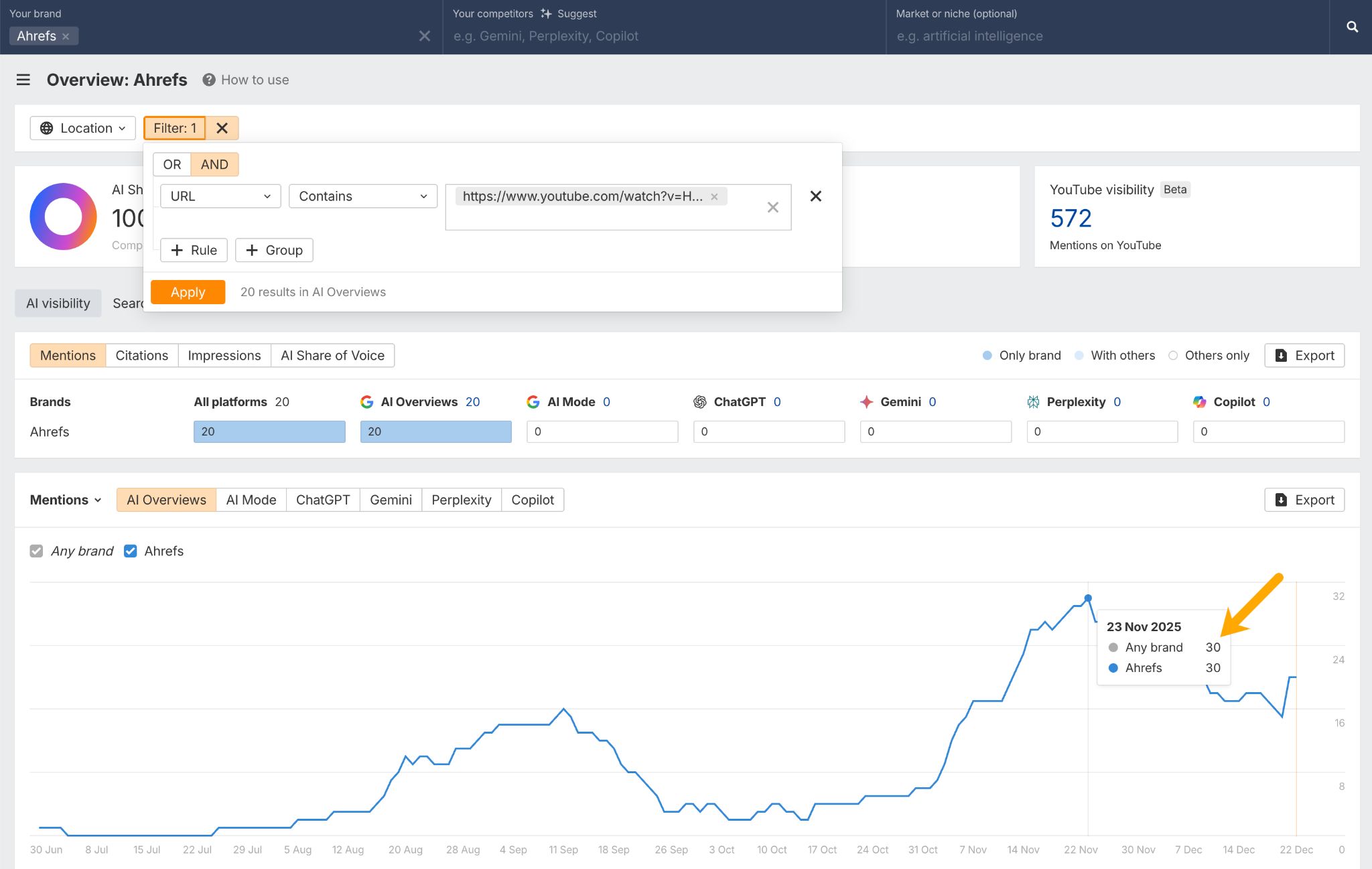
Then replicate what works—create similar videos or pitch yourself to creators making that content.
We analyzed the top 50 websites mentioned across 76.7 million AI Overviews and found a strong correlation (0.70) between being mentioned on highly-linked pages and AI Overview visibility.
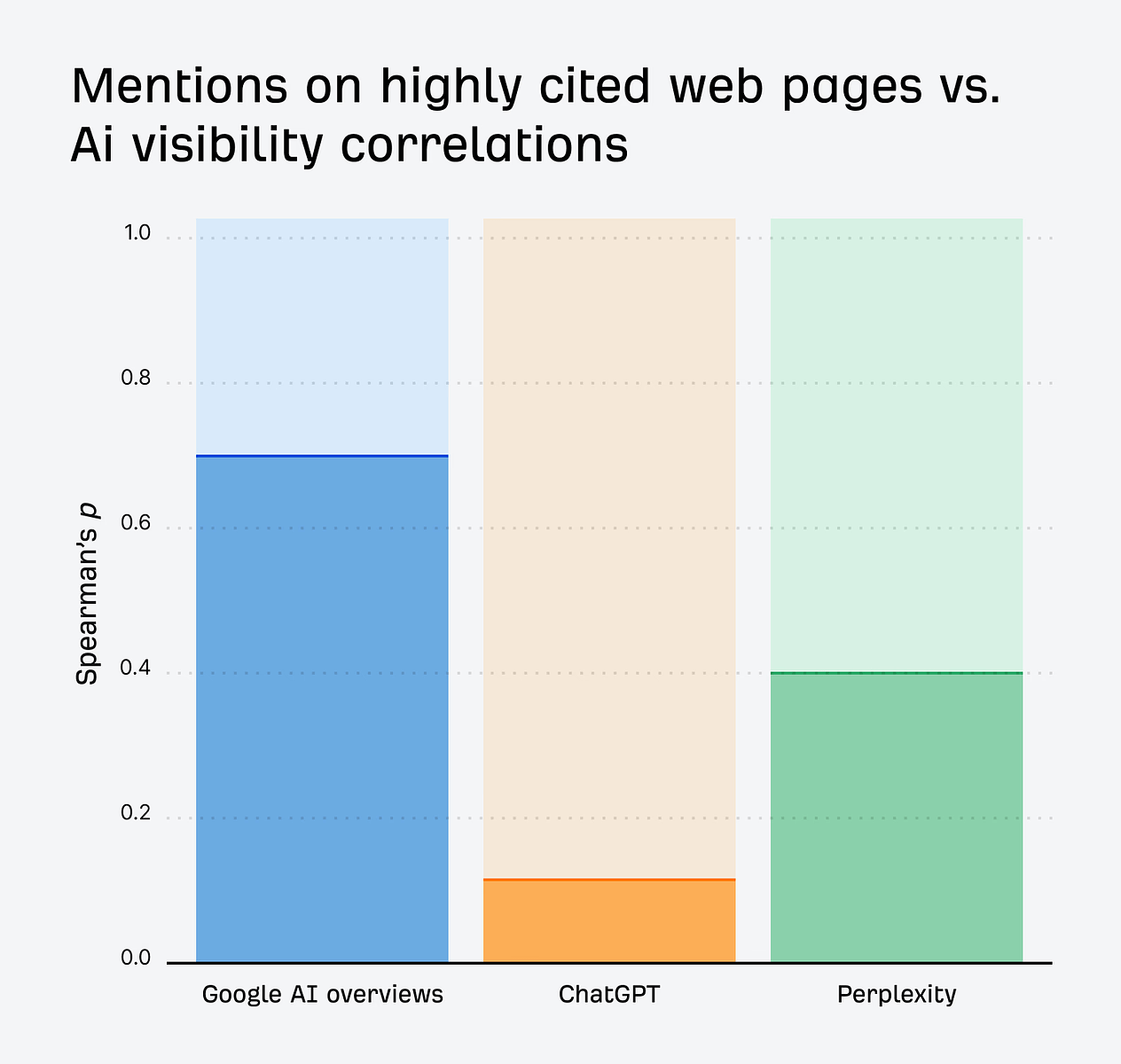
Pages that other websites deem worthy of linking to carry more weight—when your brand appears on these authoritative sources, AI Overviews are significantly more likely to mention you.
The key is earning mentions on pages that already have strong backlink profiles, not just any mention.
To find these kinds of pages, head to the “Link intersect” report in Ahrefs Competitive Analysis.
Then select the “Referring pages” tab, and filter for pages with 50+ DR.
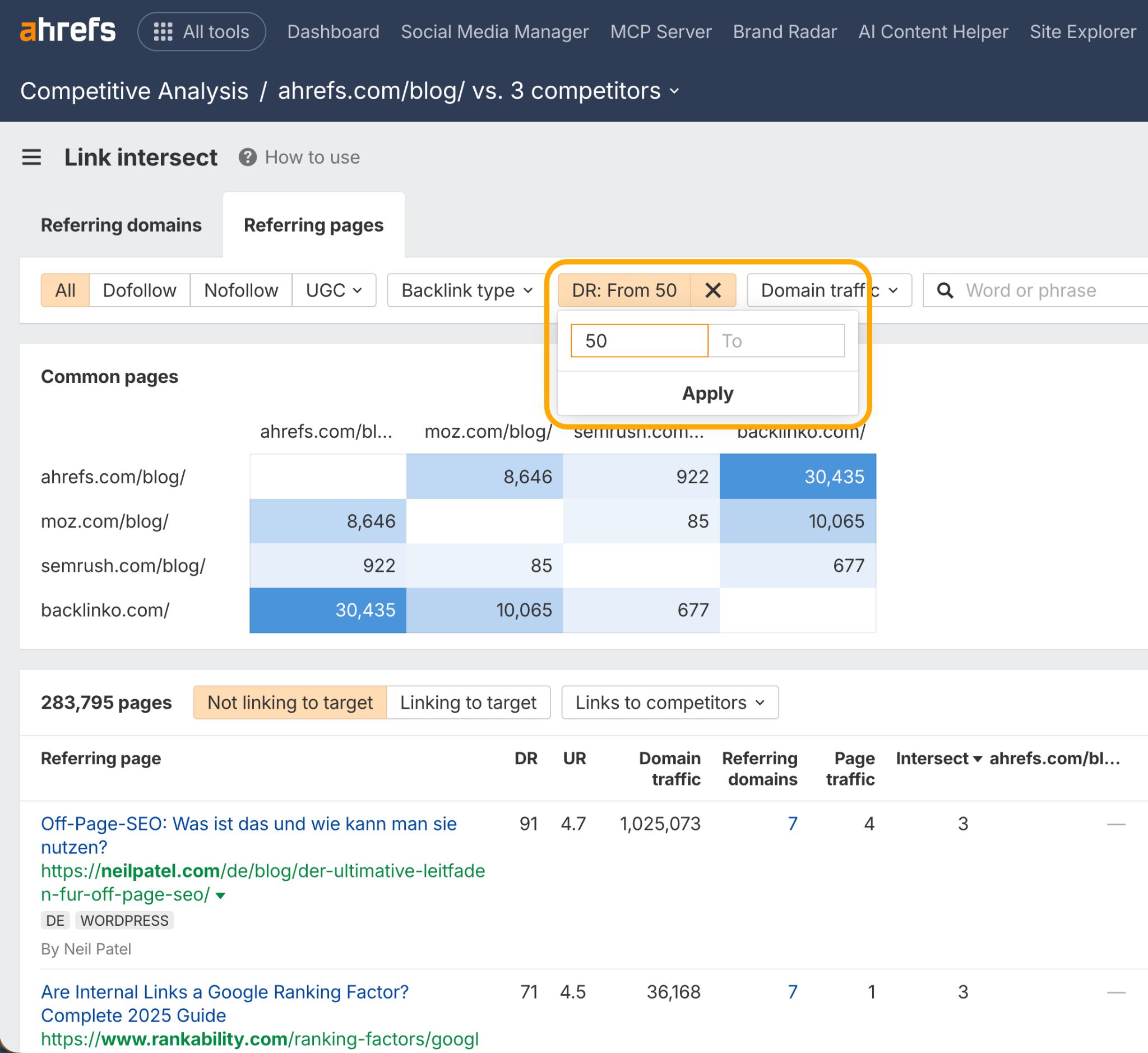
This will show you high-authority pages in your industry that mention competitors but not you.
Pitch guest contributions, offer expert quotes, or create resources that other sites will be keen to mention on their top pages.
It’s a widely held belief that structured data can help you show up more often in AI search.
However, the jury is still out on the extent to which schema is recognized by Google’s AI model, Gemini.
LLMs turn words into numerical representations during training, so the schema markup within content essentially gets randomized.
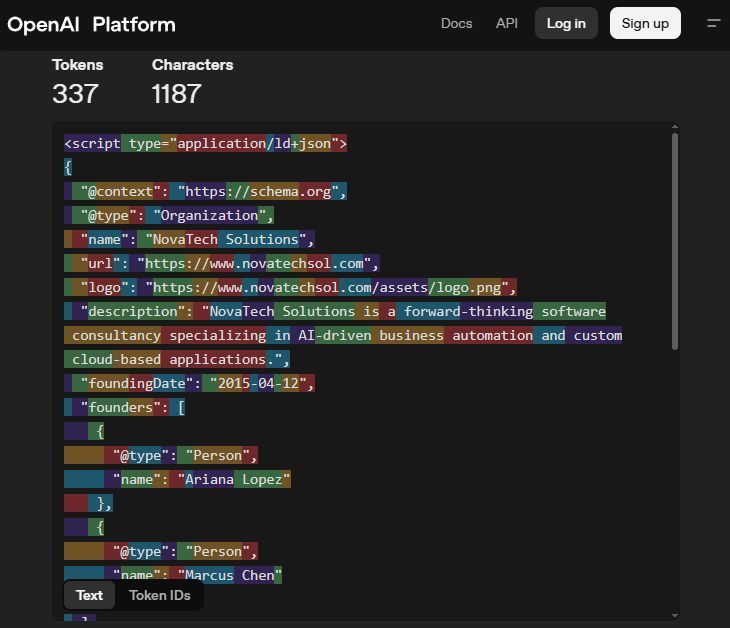
What’s more, many AI crawlers can’t access schema data if it’s client-side rendered (e.g. via Javascript)—even though many sites rely on this setup.
Instead, they tend to look at the raw HTML of a page or use a basic snapshot, without fully loading everything (at least, for now).
Convert Javascript so AI assistants can read your content
If your site relies heavily on JavaScript, there’s a workaround. Tools like prerender.io can show bots a ready-made HTML version of your page that already includes the schema, content, and links.
But structured data is still said to have an indirect impact on AI search visibility.
During the Google Search Central Live conference Senior Search Analyst John Mueller explicitly stated that structured data is critical for AI search.
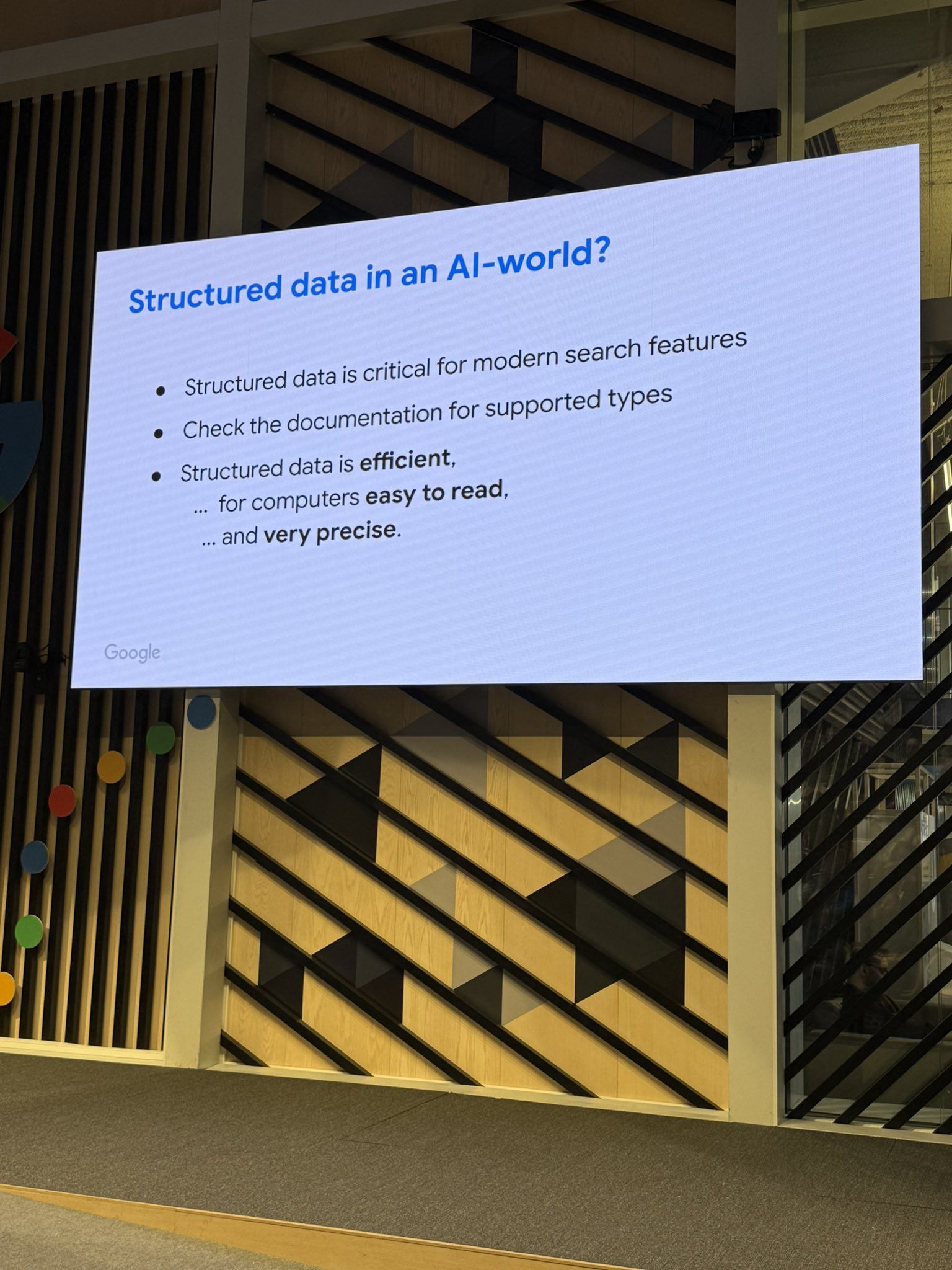
That’s because AI visibility hinges on search visibility, due to the process of RAG (retrieval augmented generation).
This is where AI platforms visit the SERPs and top up their existing training knowledge with new information—a process called “grounding” (mentioned earlier).
Unlike AI bots and crawlers, structured data is much better handled by Google. It’s also crucial for search visibility, since it contributes to the knowledge graphs that search engines are built on.
In other words, structured data means you’re more likely to be included in the SERPs, which, in turn, puts you in the selection pool for AI Overviews during RAG.
While we don’t have definitive proof that schema markup helps you rank in AI Overviews, both Google and Microsoft have confirmed that structured data helps AI systems interpret content correctly.
We’re running a study on the AI visibility impact of schema as we speak—so I’ll update this section with our findings shortly.
In the meantime, given that it’s already a traditional SEO best practice, implementing relevant schema types like Article, HowTo, and FAQPage is a low-risk way to potentially improve the machine readability of your content for AI systems.
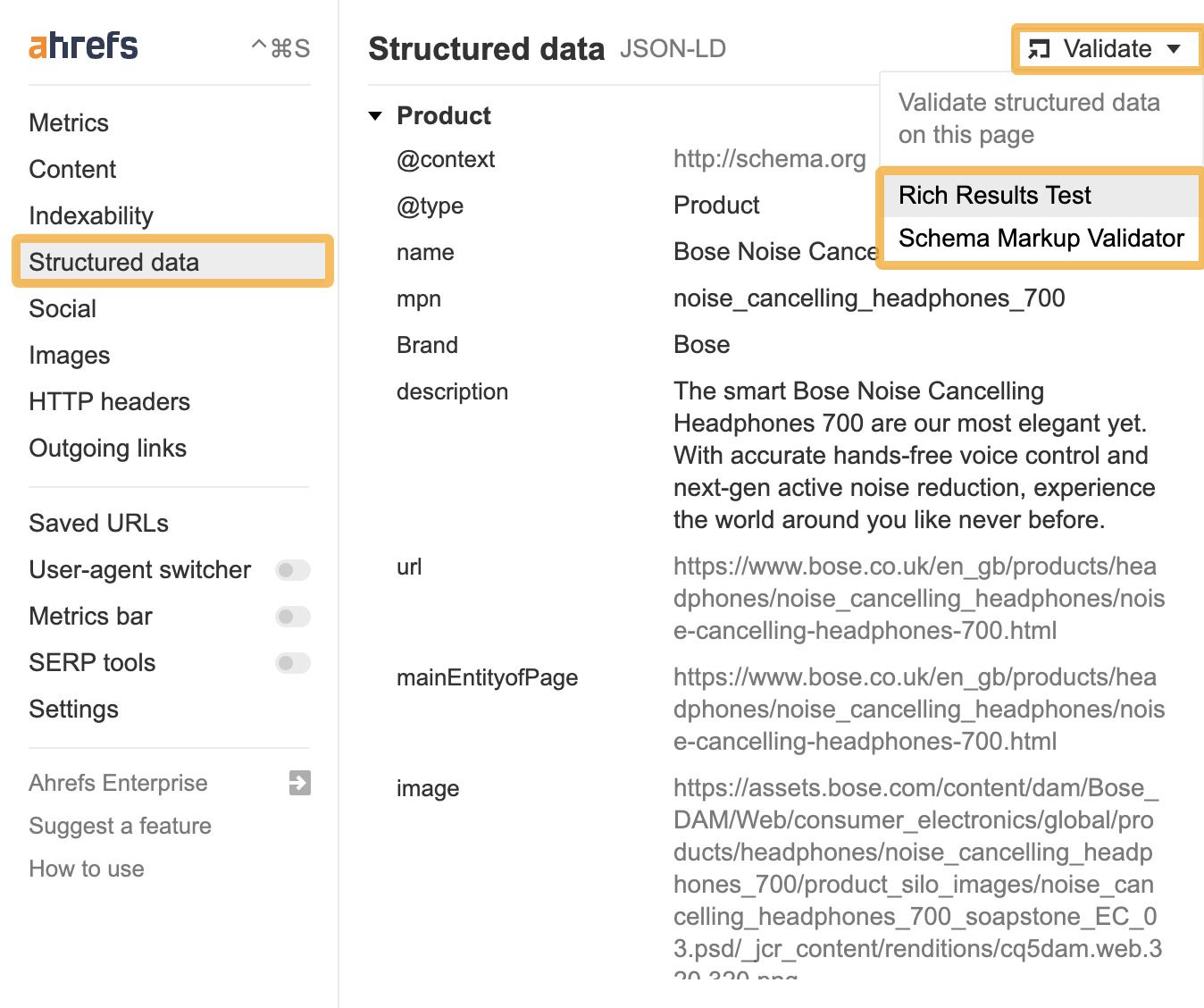
To check your content’s existing schema markup, you can use the Schema Validator or Google’s Rich Results Test tool.
You can also find these tools via the “Structured data” tab in Ahrefs’ SEO Toolbar.
And if you want to do a full schema audit of your content, set up a crawl of your site or blog in Ahrefs Site Audit, then head to the “Issues” report—this will show you your structured data issues.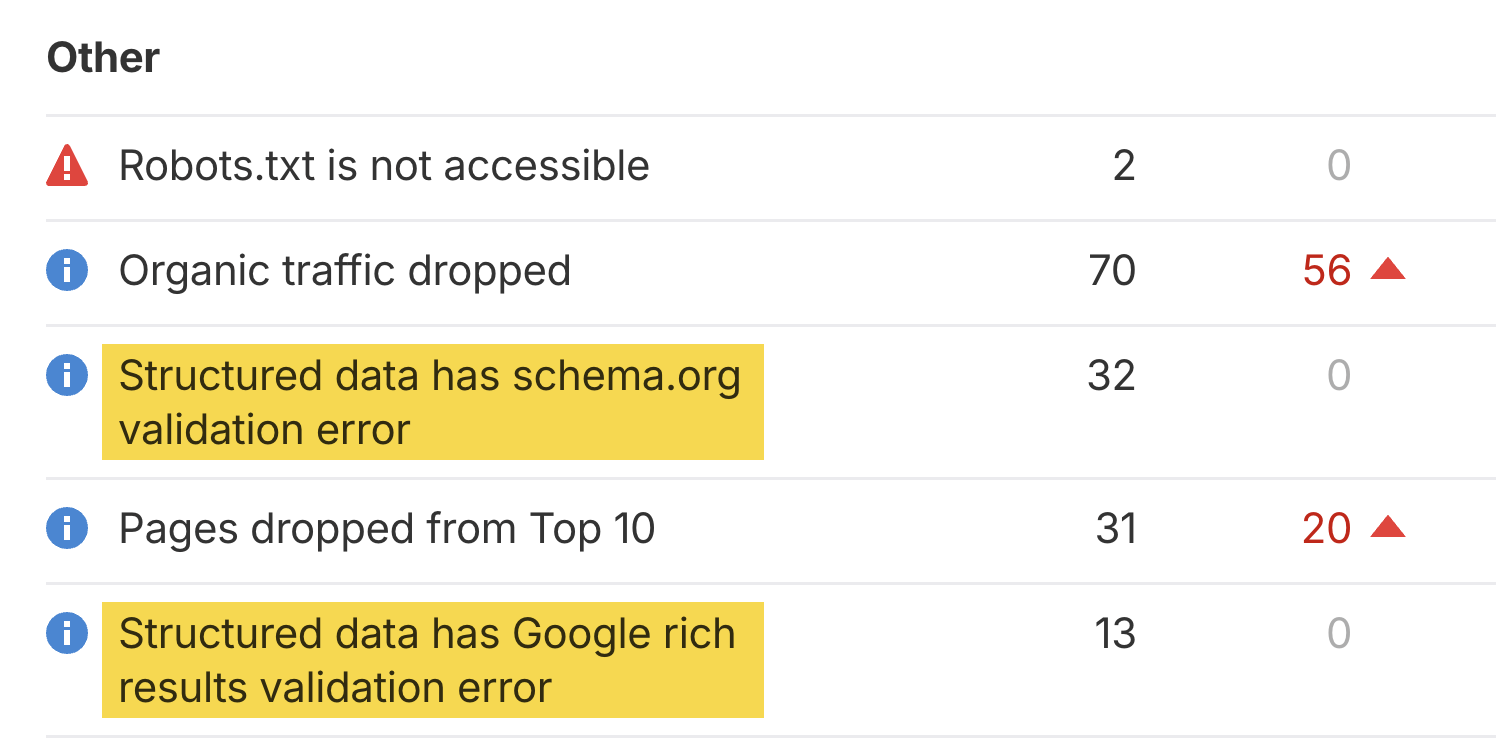
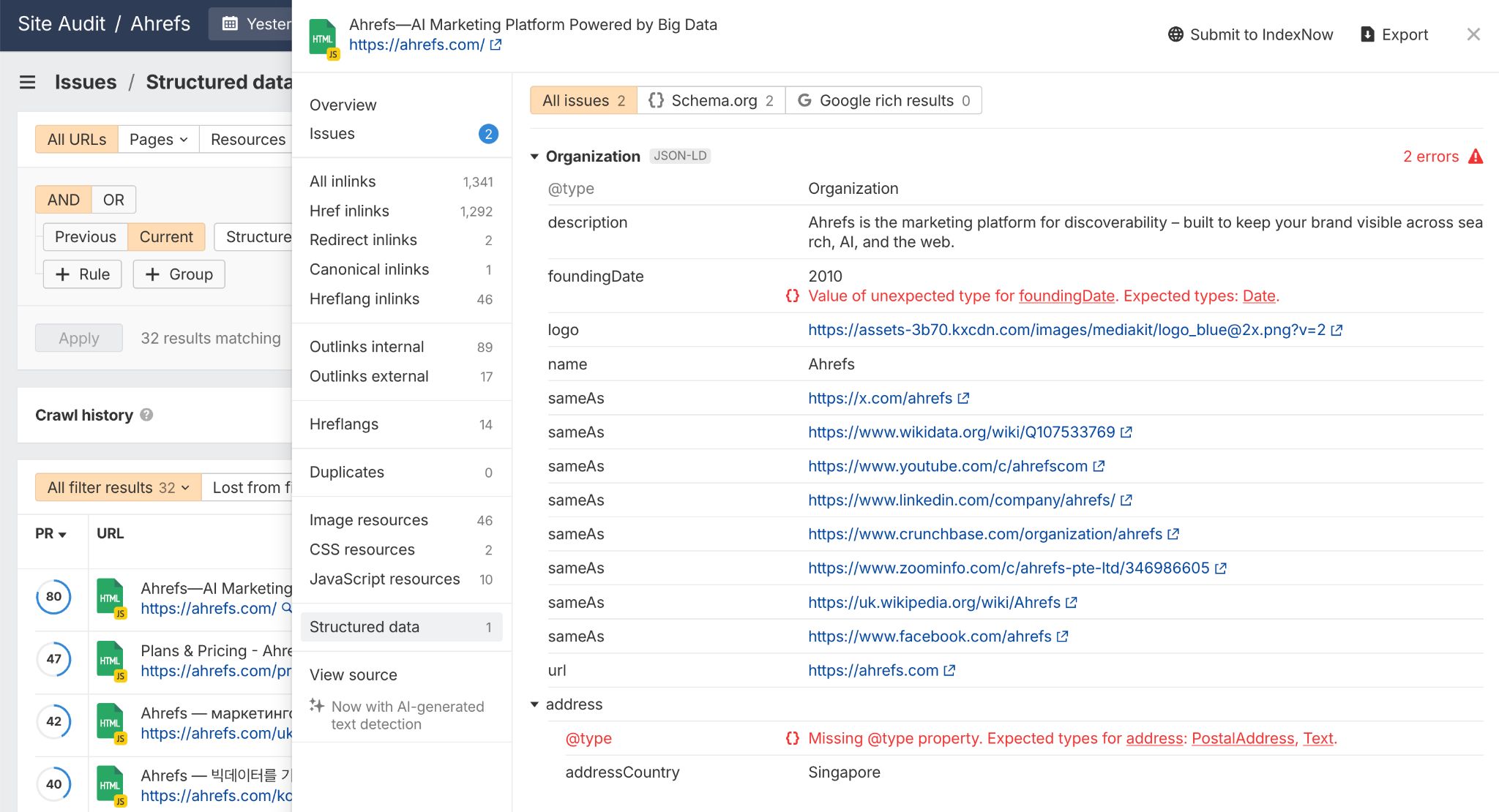
Clicking on those rows will take you to a fully configured report in Page Explorer where you can view every page impacted.
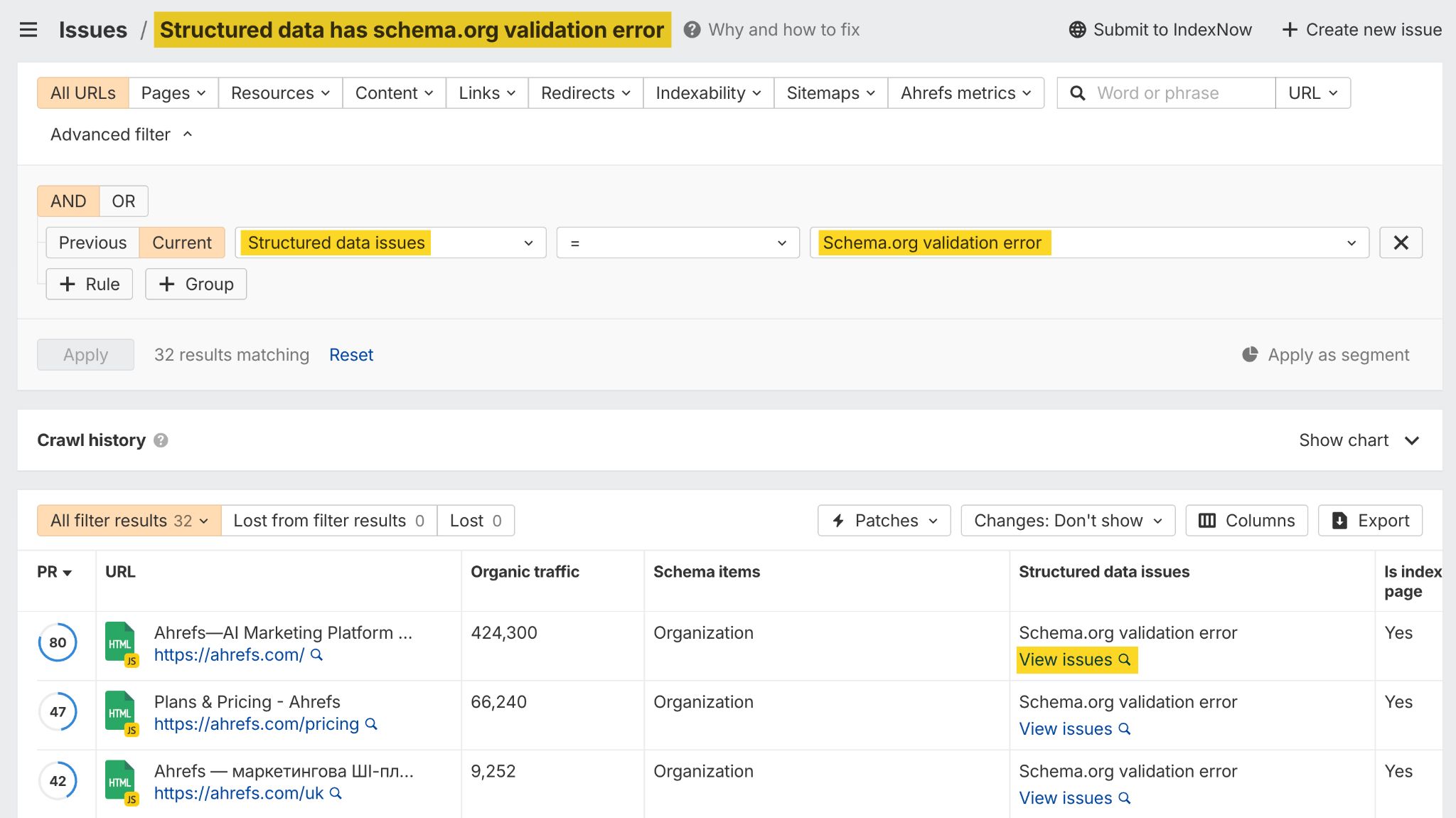
Then hit the “View issues” expander to see what exactly is missing, so you can push a fix.
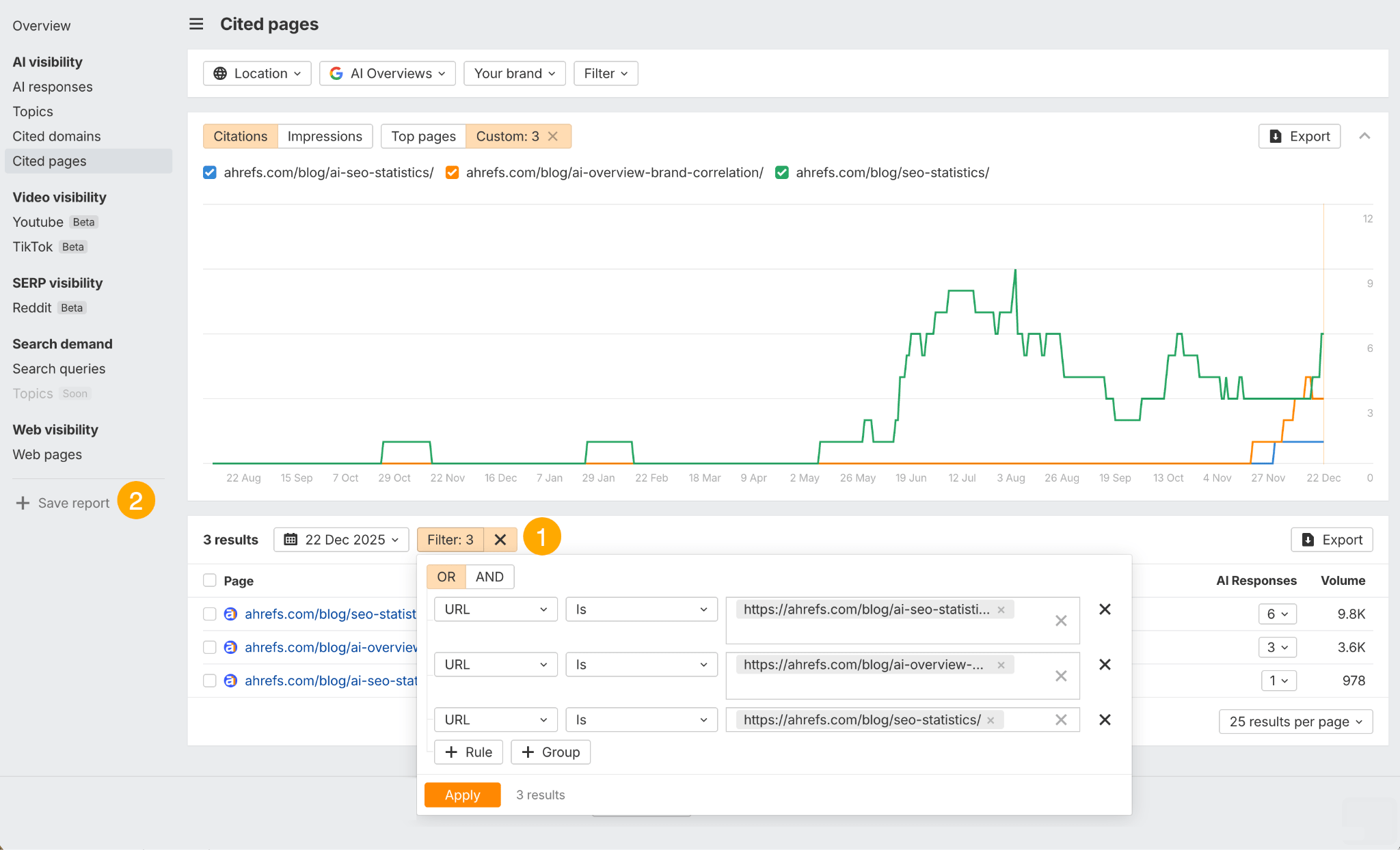
Finally, monitor those URLs in Ahrefs Brand Radar to see if your fixes have led to a bump in AI Overview visibility. Just set up a citation filter in the Cited Pages report, then hit “Save report”.
Final thoughts
AI Overviews aren’t going anywhere, and the rules for ranking in them are still being written.
The seven strategies we’ve covered—from building topical authority to better matching searcher intent—are based on our analysis of millions of AI responses, not speculation.
Start with topic-level optimization and genuine brand mentions, then layer in the technical improvements as you go.